
As a Professionally Certified Coach with nearly a decade of experience coaching more than 2,000 moms, I’ve seen firsthand how changing your mindset can change your life.
It’s something I know not only from my work with clients, but from my own life, too.
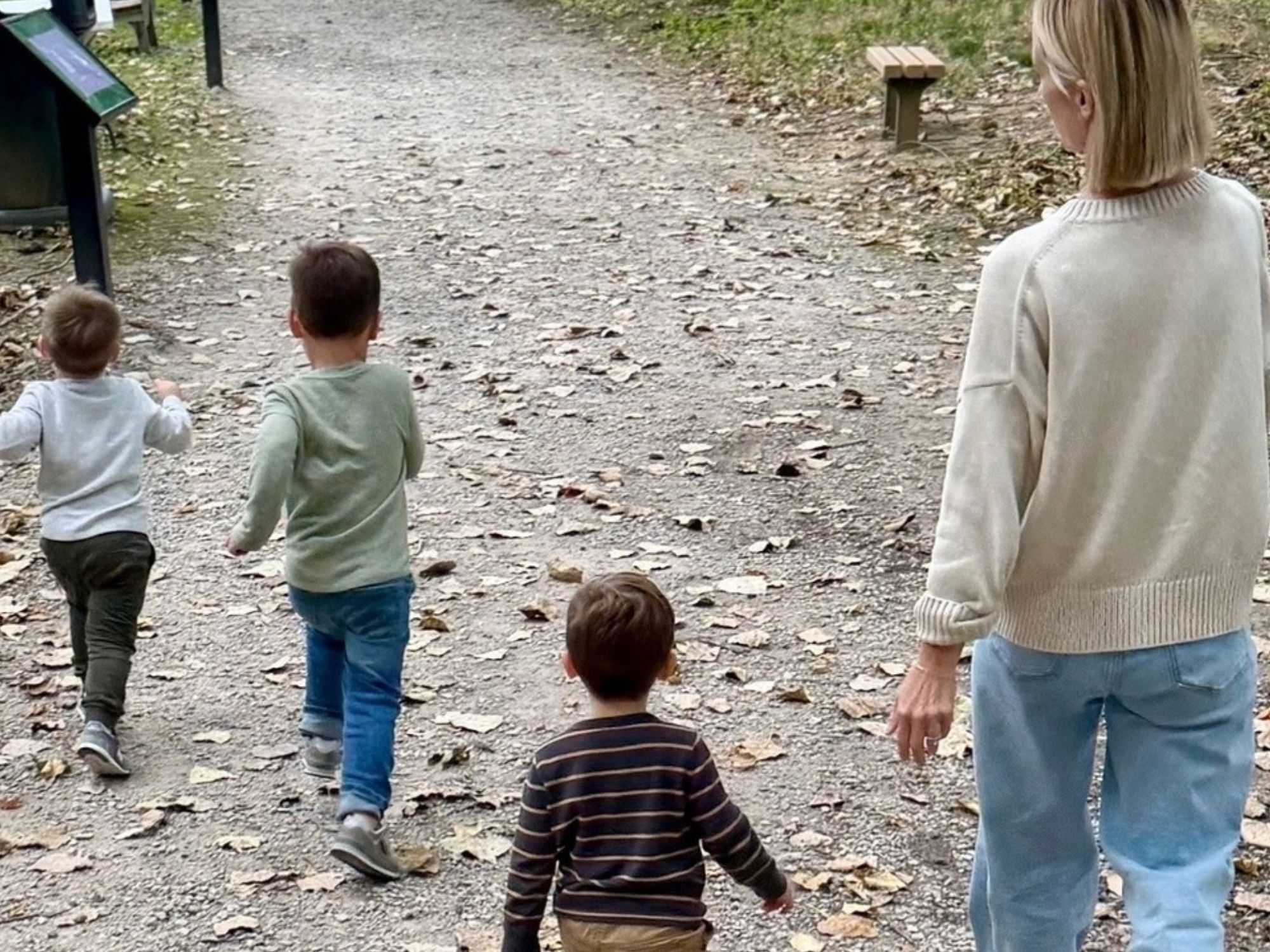
That’s why teaching my three boys how to have a growth mindset is one of my biggest parenting priorities.
I want them to grow up knowing they can learn new skills, solve problems, navigate challenges, and get better at things through practice and effort.
And I don’t think we need to wait until our kids are older to teach them these skills. We can start right now, in the small, everyday moments of motherhood.
Here are seven things I do to help my kids develop a growth mindset.
1. I Teach Them To Be Solution-Focused Instead Of Problem-Focused
One of my favorite mindset tools to teach my kids is how to be solution-focused instead of problem-focused.
For example, one of my sons will say, “Mommy, I can’t hear the music!”
And I’ll respond, “That’s the problem. What’s the solution?”
He’ll think for a second and say, “Mommy, can you please turn up the music?”
It’s such a simple interaction, but the skill I’m teaching him is incredibly valuable.
Instead of just noticing what’s wrong, I’m teaching him to think about what he can do about it.
The more we practice being solution-focused, the better we become at solving problems.
And this is a skill that extends far beyond childhood.
Whether my kids are navigating friendships, struggling with something at school, facing challenges in their careers, or working toward a goal, I want them to know how to identify a problem and come up with possible solutions.
This doesn’t mean ignoring problems or pretending everything is fine. It means learning to direct your attention toward what you can do next.
The goal is to raise kids who don’t just see problems. They see possibilities.
Resources:
- How To Be A More Patient Mom: Overcoming Guilt And Frustration (blog post)
- 200 Affirmations For Kids (download)
- How To Validate Your Kids Feelings (podcast)
- 40 Of The Best Parenting Tips (blog post)
2. I Praise Effort Instead Of Outcomes
Another way I teach my kids to have a growth mindset is by praising their effort instead of just their results.
For example, instead of saying, “You’re so smart!” when my son figures something out, I might say, “You worked really hard on that!”
Or instead of saying, “You’re so good at building!” I’ll say, “I noticed you kept trying different ways until you figured it out.”
This distinction matters because when kids are praised primarily for being smart, talented, or naturally good at something, they can start to believe those qualities are fixed.
And when they encounter something difficult, they may interpret that struggle as evidence that they’re not good at it.
Instead, I want my kids to understand that their abilities can grow through effort, practice, and learning.
Of course, I celebrate their accomplishments, too. But I don’t want them to believe that the only thing worth celebrating is the outcome.
I want them to value the process of learning, even when they don’t get the result they wanted.
Because when kids learn to value effort and growth instead of just achievement, they’re more willing to try new things, take on challenges, and keep going when something doesn’t come easily.
Resources:
- Whining And Complaining In Kids (podcast)
- Lighten Up Motherhood (free course)
- 15 Phrases To Use When Your Child Doesn’t Listen (blog post)
- When You Don’t Like Playing With Your Kids (podcast)
3. I Teach Them The Power Of “Yet”
One of the simplest ways I help my kids develop a growth mindset is by teaching them the power of the word “yet.”
When one of my boys says, “I can’t do it,” I’ll respond, “You can’t do it yet.”
Or when they say, “I don’t know how,” I’ll say, “You don’t know how yet.”
It’s one small word that completely changes the meaning of the sentence.
“I can’t do it” suggests that your ability is fixed.
“I can’t do it yet” leaves room for learning, growth, and improvement.
And that’s exactly what I want my kids to understand.
Just because they can’t do something today doesn’t mean they won’t be able to do it tomorrow, next month, or next year.
They might need more practice. They might need to learn a new skill. They might need help from someone who knows how.
But not knowing how to do something isn’t a problem. It’s part of learning.
I also love this tool because it’s something kids can eventually start using on their own.
Instead of automatically thinking, “I’m not good at this,” they can learn to think, “I’m not good at this yet.”
The goal isn’t to teach my kids that they can do absolutely anything. It’s to teach them that their current abilities don’t define their future potential.
Resources:
- Tantrum Guide: How To Stay Calm And Help Your Kids (download)
- How To Teach A Growth Mindset To Kids (blog post)
- My Top 7 Parenting Tools (podcast)
- Tantrums And Intense Meltdowns: My Tips And Experience (podcast)
4. I Let Them Struggle Instead Of Immediately Stepping In To Help
As moms, it’s so natural to want to jump in and help our kids when they’re struggling with something.
But one of the best ways we can help our kids develop a growth mindset is by giving them opportunities to figure things out on their own.
For example, if one of my boys is struggling to put together a puzzle or build something with his blocks, I try not to immediately step in and show him how to do it.
Instead, I might say, “Hmm, what else could you try?”
Or, “Do you want to try doing it a different way?”
This gives him an opportunity to think, experiment, and problem-solve instead of immediately looking to me for the answer.
Of course, there’s a difference between allowing our kids to experience a little frustration and leaving them to struggle when they genuinely need help.
I’m not trying to make things unnecessarily difficult for my kids. I’m trying to give them opportunities to build confidence in their own abilities.
Because every time they work through something challenging, they’re gathering evidence that they can do hard things.
And that evidence matters.
The more experiences they have figuring things out for themselves, the more they’ll trust their ability to navigate challenges in the future.
I don’t want my kids to believe that something being hard means they can’t do it. I want them to know that sometimes things are hard because they’re learning something new.
Resources:
- Life Lessons Every Mom Should Teach Her Kids (blog post)
- Tantrums And Intense Meltdowns: My Tips And Experience (podcast)
- I don’t punish my kids. Here’s why. (podcast)
- Alternatives To Punishment (And Why I Don’t Punish My Three Boys) (blog post)
5. I Teach Them That Mistakes Are Part Of Learning
One of the most important things I want my kids to understand is that making mistakes is a normal part of learning.
I don’t want them to grow up believing that making a mistake means they’ve failed or that something is wrong with them.
Instead, I want them to see mistakes as opportunities to learn, grow, and improve.
For example, when one of my boys makes a mistake, instead of focusing on what went wrong, I might ask, “What did you learn from that?” or “What would you do differently next time?”
This shifts the focus away from judging the mistake and toward learning from it.
I also try to model this in my own life.
If I make a mistake, I can acknowledge it, take responsibility, and talk about what I’ll do differently moving forward.
I want my kids to see that even adults make mistakes. And that making a mistake doesn’t have to become a big story about who you are or what you’re capable of.
This is especially important because so much of what holds people back in adulthood is their fear of getting things wrong.
They avoid trying something new because they might fail. They don’t pursue opportunities because they might not succeed. They spend so much energy trying to get everything right that they limit their own growth.
I want my kids to develop a different relationship with mistakes.
Making a mistake isn’t the opposite of growth. It’s often part of how growth happens.
Resources:
- 7 Parenting Tools For Type-A Moms (blog post)
- 15 Activities To Increase Connection With Your Kids (blog post)
- When Your Child Has A Challenge You Wish They Didn’t Have (podcast)
- Mom Like It’s Your Job (podcast)
- How To Make Meaningful Moments With Your Kids When You’re Busy And High-Achieving (blog post)
6. I Teach Them That They Can Feel Uncomfortable And Still Do Hard Things
One of the most important mindset skills I teach my kids is that they don’t have to feel confident, motivated, or comfortable in order to do something challenging.
They can feel nervous and try something new.
They can feel frustrated and keep practicing.
They can feel disappointed and try again.
This is something I see come up in coaching all the time. We often think we need to feel a certain way before we can take action, when the reality is that we can take action with uncomfortable feelings.
For example, if one of my boys feels nervous about trying a new activity, I don’t try to convince him that there’s nothing to be nervous about.
Instead, I might say, “Of course you feel nervous. You’ve never done this before. You can feel nervous and still give it a try.”
I’m validating how he feels while also teaching him that his feelings don’t have to determine what he’s capable of doing.
Of course, this doesn’t mean forcing my kids into situations they’re not ready for or ignoring when they need support.
It means helping them understand that discomfort isn’t always a sign that something is wrong.
Sometimes discomfort is simply part of doing something new.
And the more they practice taking small steps through manageable discomfort, the more confidence they can develop in their ability to handle challenges.
I want my kids to know that they don’t have to wait until they feel confident to try. Sometimes confidence comes from trying.
Resources:
- 10 Affirmations I Say To My Kids (blog post)
- 9 Phrases I Don’t Say To My Kids (blog post)
- How To Stay Calm When Your Child Has A Meltdown (12 Phrases To Try) (blog post)
- How To Stay Calm During Your Child’s Tantrums: Strategies For Moms (blog post)
- How To Help Your Child Through Challenges Without Worrying And Fixing (blog post)
- Why Gratitude Won’t Solve Your Motherhood Problems (blog post)
7. I Model A Growth Mindset In My Own Life
One of the most important ways I help my kids develop a growth mindset is by continuing to work on my own.
Through weekly group coaching and monthly masterclasses inside my Mom On Purpose Membership, I practice the mental and emotional skills that help me show up as a calmer, more grounded, connected, and confident mom.
And research supports why this matters. Studies show that parents who are better at regulating their emotions tend to engage in more positive parenting behaviors and have children with stronger emotional regulation skills.
The way we show up as moms matters. Our kids aren’t just learning from what we teach them. They’re learning from how we live.
When we grow, our kids benefit, too.
If you want to develop these same mental and emotional skills in your own motherhood journey, I’d love to invite you to join us inside Mom On Purpose.