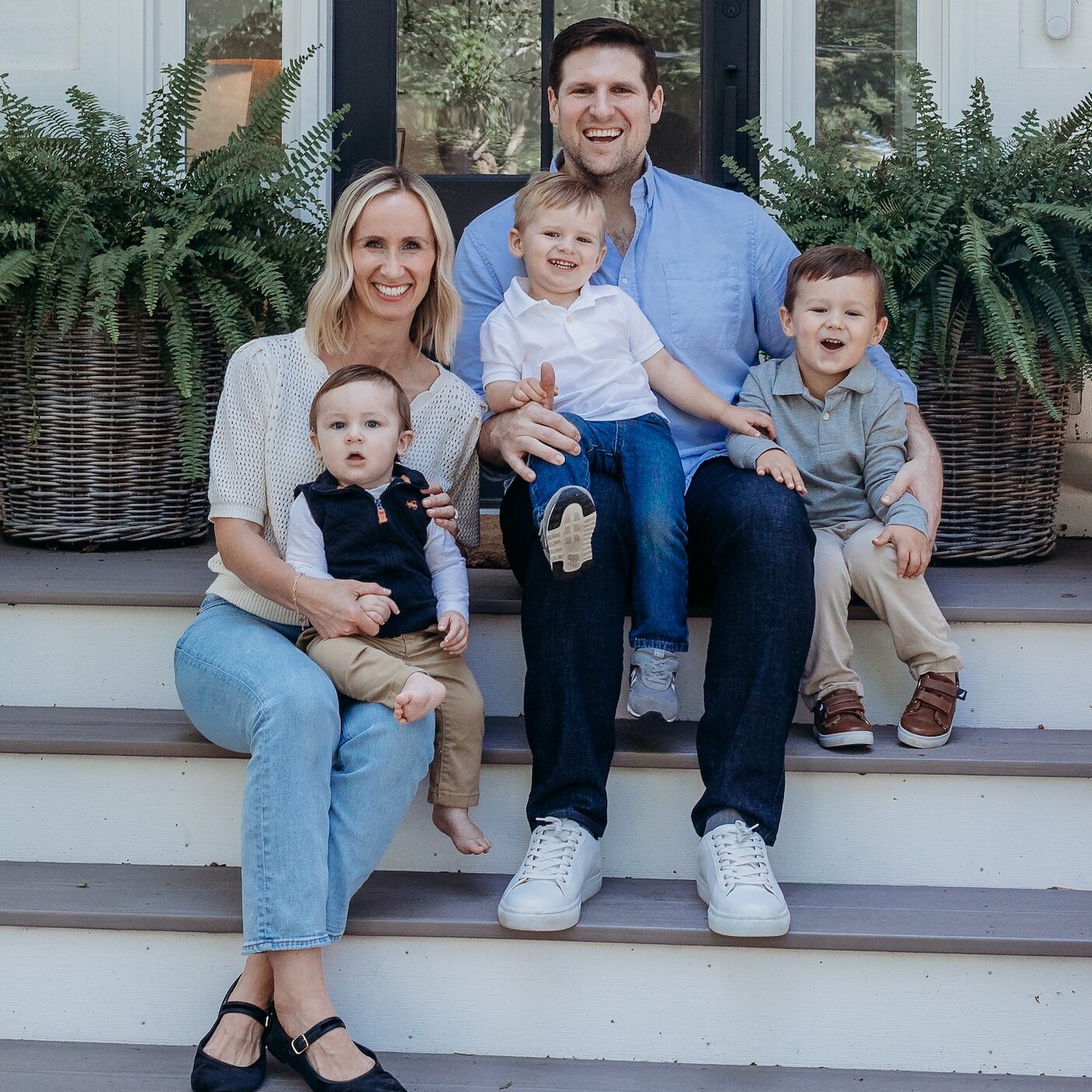

As a millennial mom of three boys, I know firsthand how easy it is to put yourself last. There are always dishes to wash, appointments to schedule, lunches to pack, emails to answer, and little people who genuinely need you. But I’ve learned that prioritizing my own mental, emotional, and physical health isn’t selfish—it’s one of the best things I can do for my family and myself.
The Trap So Many Moms Fall Into
The mental load is real.
As your kids get older, motherhood becomes less about physical caregiving and more about constant management. School schedules, sports, homework, teacher emails, birthday parties, summer camps, appointments, grocery shopping, meal planning, laundry, your marriage, your career—it all lives in your brain.
Most moms become incredibly good at taking care of everyone else.
You know who needs new shoes. Which child has a field trip next week. What has to be signed before Friday. When the dentist appointment is. What you’re making for dinner.
You’re carrying hundreds of invisible responsibilities every single day.
The problem isn’t that you’re doing too much.
It’s that somewhere along the way, many moms stop caring for themselves with the same intention they care for everyone else.
Your own mental, emotional, and physical health quietly move to the bottom of the priority list.
At first, it doesn’t seem like a big deal.
But over time, that mental load starts to show up everywhere.
You lie awake at night thinking about tomorrow instead of sleeping. You feel overwhelmed before the day even begins. You snap at your kids over something small, then immediately feel guilty. You feel anxious, emotionally drained, or like your brain never actually shuts off.
You tell yourself you’ll focus on yourself later.
After the school year. After soccer season. After things calm down. After life feels less busy.
But that season rarely comes.
There will always be another schedule to manage, another commitment to remember, another person who needs something from you.
That’s why I stopped waiting.
I realized that taking care of myself wasn’t something I could do once everything else was handled. It had to become part of how I handled everything else.
Resources:
- You’re Not Failing At Motherhood. It’s Hard For Your Brain. There’s A Difference. (podcast)
- 25 Tips All Overwhelmed Moms Need (blog post)
- Mom Thoughts: I can’t handle this, this is too much, and one step forward and two steps back (podcast)
- Toxic Mom Thoughts About Summer (podcast)
How I Prioritize My Mental, Emotional, And Physical Health (As A Millennial Mom Of 3 Boys)
I don’t believe self-care is about bubble baths or escaping your life.
I believe it’s about becoming the kind of woman who knows how to take care of herself from the inside out.
For me, that comes down to three areas: my mental health, my emotional health, and my physical health. They’re different, but they work together. When one starts to suffer, the others usually do too.
Here’s what that looks like in my life—
How I Prioritize My Mental Health
I prioritize my mental health by managing my mind.
After coaching thousands of moms inside the Mom On Purpose Membership using my 3-Part Thought Work Framework, I’ve found that one of the biggest misconceptions about mental health is that it’s created by our circumstances. It’s not.
Our thoughts create our feelings. That means the quality of our mental health is directly impacted by the quality of our thinking.
That’s why I pay close attention to what’s happening in my mind every day. I notice the thoughts my brain is offering, identify whether they’re facts or just thoughts, and decide whether I want to keep thinking them.
Sometimes that means questioning a thought. Other times it means intentionally choosing a different one. And sometimes it simply means becoming aware of a thought so it no longer runs the show.
This isn’t about positive thinking. It’s about intentional thinking.
I don’t leave my mindset up to chance. I practice thought work every day, and I continue listening to coaching because I believe everyone—including coaches—benefits from having their thinking challenged.
Managing my mind isn’t something I do only when life gets hard. It’s a daily practice that shapes how I experience motherhood, marriage, work, and every other part of my life.
Resources:
- Mantras For The Mental Load Of Motherhood (blog post)
- How To Let Go Of Negative Thinking And Reprogram Your Mind For Positive Thinking (blog post)
- Mindset Tips For Type-A Moms (podcast)
- 5 Mindset Shifts For Ambitious Moms To Thrive In Motherhood (blog post)
- Mindset In Motherhood: Everything You Need To Know (blog post)
How I Take Care Of My Emotional Health
Mental health and emotional health are closely related, but they’re not the same.
My mental health is about my thinking. My emotional health is about my feelings.
After years of coaching moms, I’ve found that most women were never taught what to do with uncomfortable emotions. We either avoid them, suppress them, distract ourselves from them, or try to think our way out of them.
I take a different approach.
The first step is naming what I’m feeling. Instead of saying, “I’m just stressed,” I get specific. Am I disappointed? Frustrated? Anxious? Lonely? Overwhelmed? Naming the emotion creates awareness, and awareness is always the first step.
Next, I allow the feeling instead of resisting it.
This was one of the biggest shifts for me. Feelings aren’t problems to solve—they’re experiences to have. The more we resist an emotion, the longer it tends to stick around. When we allow ourselves to actually feel it, it passes much more quickly.
Finally, I choose how I want to feel on purpose.
That doesn’t mean pretending I’m happy when I’m not. It means asking myself how I want to show up in this moment. Maybe I want to feel calm before walking into a difficult conversation. Maybe I want to feel compassion instead of frustration with one of my boys. Maybe I want to feel confident before making a business decision.
Those feelings don’t happen by accident. I create them intentionally by choosing thoughts that support them.
I’ve coached thousands of moms through this process, and I’ve seen how life-changing it can be. When you stop fearing your emotions and learn how to process them instead, you become far more resilient. You stop reacting to life and start responding to it with intention.
That’s what emotional health looks like to me—not feeling good all the time, but knowing I can handle any feeling that comes my way.
This is exactly what I teach inside the Mom On Purpose Membership inside the Processing Feelings Course.
The Way I Prioritize My Physical Health
Taking care of my body is just as important to me as taking care of my mind.
After having three boys in three years, my life was incredibly full. I was the primary caregiver, working about 20 hours per week, running a business, taking care of our home, supporting my clients, raising our two dogs, and trying to be present in my marriage.
I didn’t have hours to spend at the gym or time to completely overhaul the way I ate.
But after gaining 50 pounds during my third pregnancy, I knew I wanted to lose the weight.
I also knew it couldn’t be a someday goal.
I wasn’t willing to wait until the kids got older, life slowed down, or my schedule magically opened up. My health was important to me then, not someday in the future.
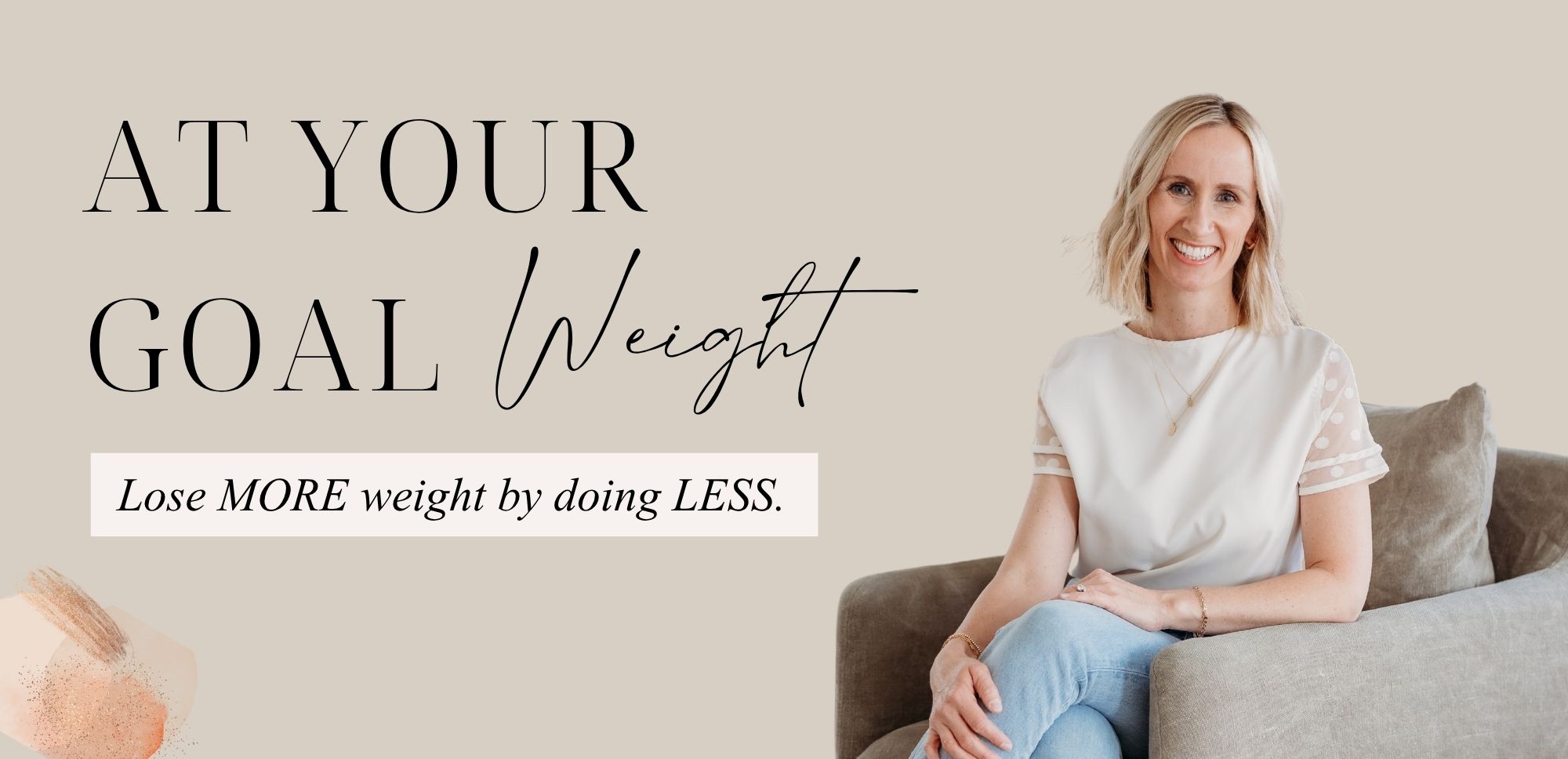
So I figured out how to lose MORE weight by doing LESS.
I ended up losing 50lbs in 4 months after having my third son. I created an entire method around how I did it — by going into a calorie deficit without counting calories. Truly a busy mom’s dream.
This is exactly what I teach in my signature weight loss course: At Your Goal Weight.
A Final Note
Life will always keep life-ing.
There will always be another school event, another deadline, another season that feels busy. If you’re waiting until life slows down to prioritize your mental, emotional, and physical health, you may end up waiting forever.
The decision to prioritize yourself—even when it feels like you have no time—is what creates change.
When you learn to manage your mind, process your emotions, and take care of your body, you don’t just decrease overwhelm, stress, anxiety, and the mental load. You become the kind of woman who knows how to take care of herself, regardless of her circumstances.
That’s the same mindset that helped me lose 50 pounds after having my third son, and it’s the same mindset I’ve taught thousands of moms through my coaching.
You don’t need life to slow down. You need to decide that your health matters now.