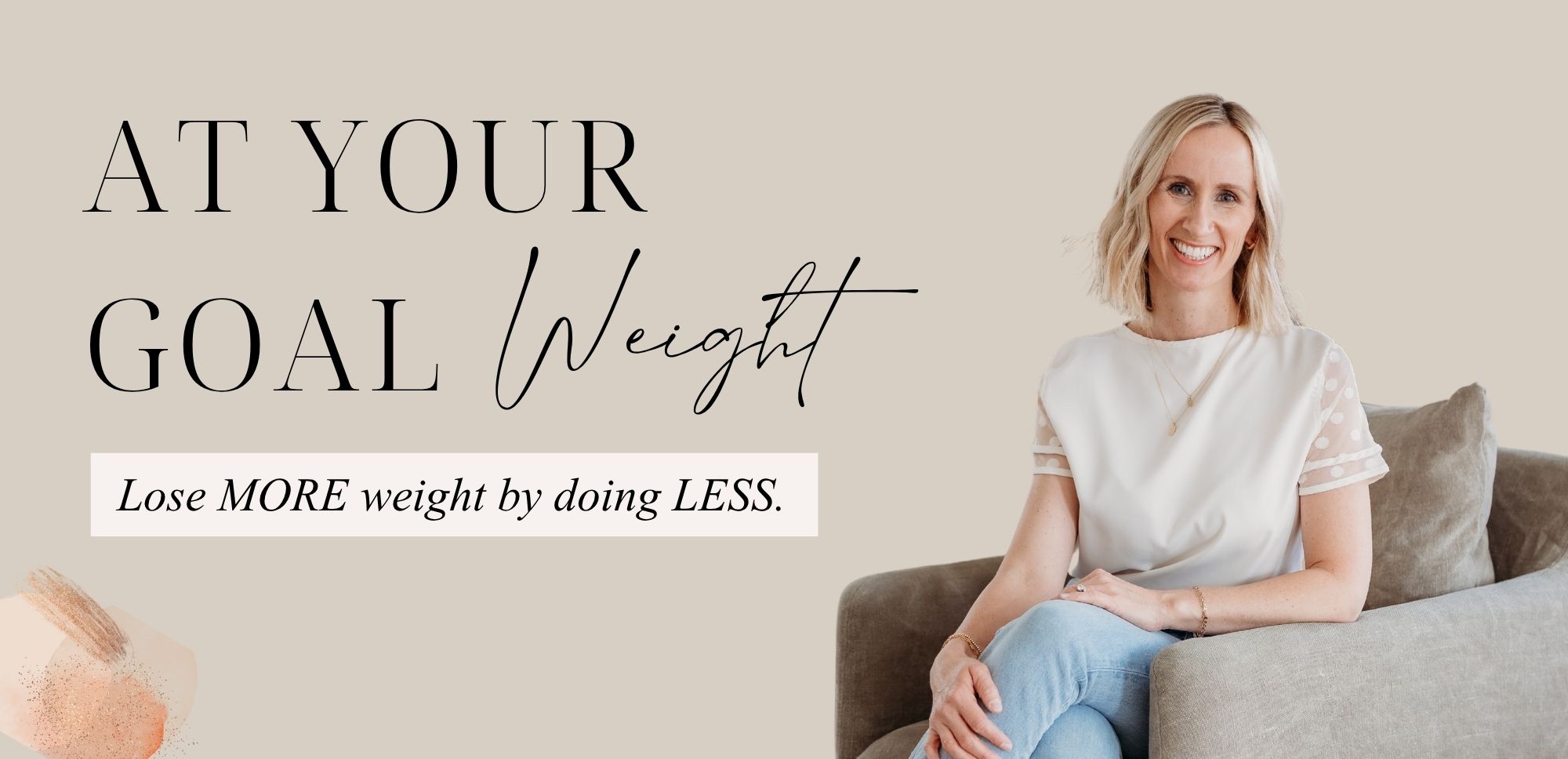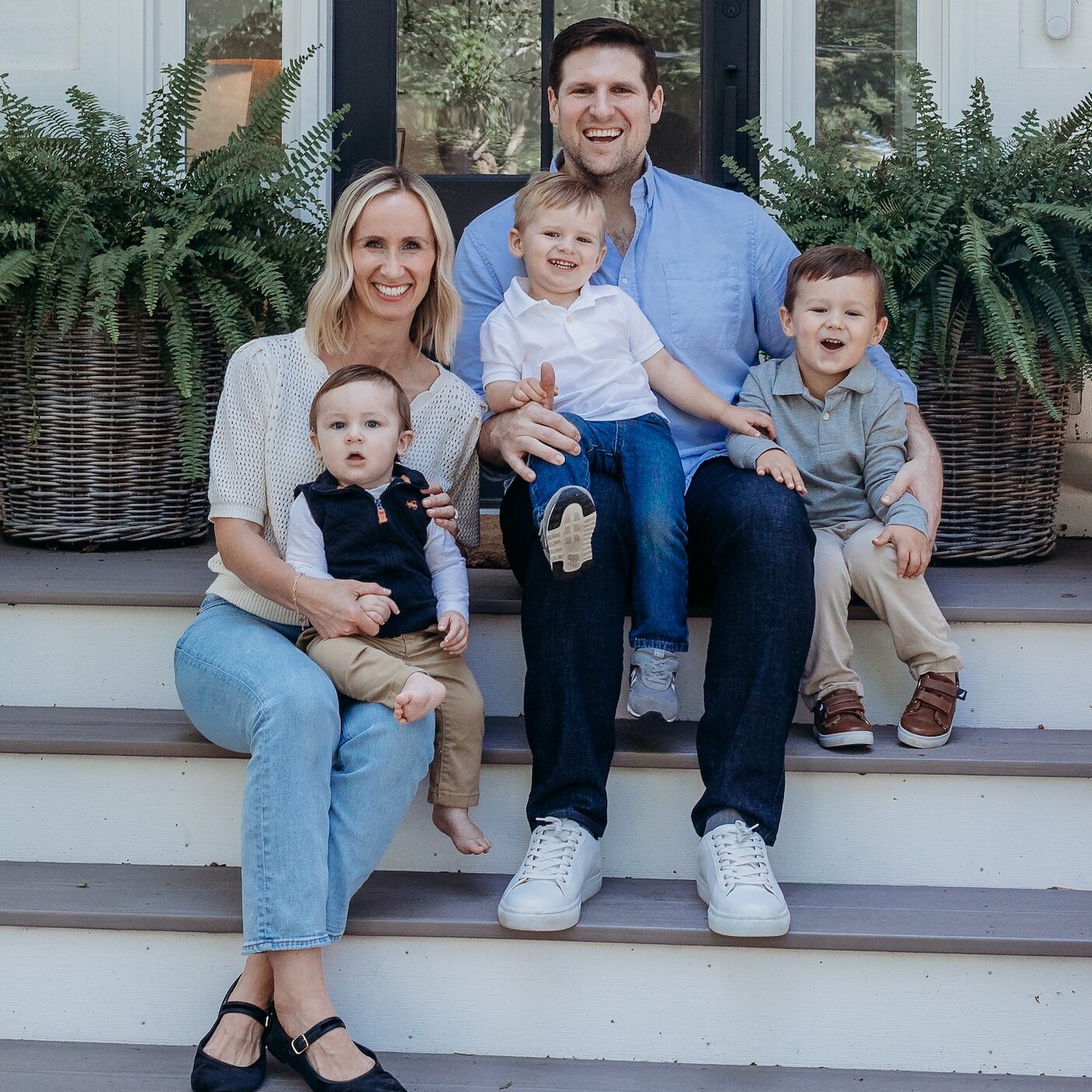
I lost 50lbs after having my third son. I did it at a time that was really crazy — I was primary caregiver with 3 under 4 at home, while simultaneously running my business to the tune of working 20 hours per week.
I had to figure out how to lose MORE weight doing LESS, so that’s exactly what I did.
I lost 50lbs in 4 months and have kept the weight off since then, almost 2 years ago. I also have helped many moms lose weight using my approach.
I think what I did *not* do to lose weight is just as important as what I did do, so let’s dive in.
1. I didn’t eat at night.
One of the biggest changes I made to lose 50lbs was that I stopped eating at night.
Before losing the weight, I would often eat after my kids went to bed. Sometimes I was physically hungry, but a lot of the time it was simply because the day was finally over. The kids were asleep, I could relax, and eating had become part of that routine.
The problem was that those extra bites, snacks, and desserts still counted toward how much I was eating that day.
To lose weight, you need to create a calorie deficit. And instead of counting every calorie I ate to make sure I was in one, I looked for the easiest places to simply eat less.
Nighttime eating was one of them.
So I stopped.
This sounds incredibly simple—and strategically, it was. But knowing you want to stop eating at night and actually following through when 8pm rolls around are two very different things.
You have habits. You have urges. You may feel hungry. You may genuinely look forward to eating after a long day.
That’s why I created 3 Steps To Stop Eating At Night. It’s a simple Mini Course where I teach you the exact 3-step framework I used to choose a cutoff time, follow through, and handle the urge to eat afterward—without relying on willpower.
It’s normally $97, but you can get instant access right now for $17.
Get 3 Steps To Stop Eating At Night for $17
2. I didn’t drink alcohol.
Alcohol is one of those things that can make losing weight harder without necessarily realizing how much it’s contributing.
Not only does alcohol itself add calories, but drinking can also make it easier to eat more than you otherwise would. A couple of drinks, appetizers, dinner, dessert, late-night food—it can add up quickly without feeling like you ate an enormous amount of food.
I didn’t drink any alcohol.
For context, I didn’t stop drinking because I wanted to lose weight. I had already stopped drinking years earlier and haven’t had alcohol in about seven years just as a lifestyle choice.
But I’m including it here because it was absolutely relevant to my weight loss. When I set out to lose 50lbs, alcohol simply wasn’t something I had to account for.
That mattered because my entire approach was about losing more weight while doing less. I wanted to create a calorie deficit without counting calories, tracking macros, or making food and weight loss my full-time job.
Not drinking alcohol removed one more source of calories—and one more variable—from the equation.
This doesn’t mean you have to give up alcohol to lose weight. You don’t. But it does mean that if you drink regularly and want to lose weight, alcohol is worth considering as part of the bigger picture.
Resources:
- How I Lost 50lbs In 4 Months After Having My Third Baby (Mini Course)
- Weight Loss For High Achieving Moms (Audio Program)
- Lose 30lbs+ In 6 Months With Natalie (1:1 Weight Loss Coaching)
- My Weight Loss Journey Losing 50lbs In 4 Months After Having My Third Baby (Blog post)
3. I didn’t count calories, macros, protein, or any other food.
I lost 50lbs without counting a single calorie, macro, gram of protein, or anything else I ate.
And YES—it is possible to go into a calorie deficit without counting calories.
Think about GLP-1s.
People taking GLP-1 medications lose weight because they ultimately eat less and create a calorie deficit. The medication can reduce appetite and increase feelings of fullness, making it easier to eat less.
But the medication isn’t counting calories for them. Their bodies don’t need to know the exact number of calories they’re eating in order to lose weight.
The same principle applies without a GLP-1: you can eat less without calculating exactly how much less you’re eating.
That’s what I did—no GLP1, no counting calories, just a simply calorie deficit using the tools I created (that you can get inside At Your Goal Weight).
As a mom of three little kids running a business, I had zero interest in making weight loss a part-time job. I didn’t want to weigh my food, log every bite, calculate macros, or spend my day trying to hit a protein target.
So I didn’t. I focused on creating the result of a calorie deficit without doing all of the tracking typically associated with creating one.
That distinction became a huge part of how I was able to lose more weight while doing less.
Resources:
- How I Lost 50 Pounds After Having My Third Baby (In Just 4 Months) (Blog post)
- Weight Loss For Moms (And My Weight Loss Journey) (Podcast)
- What I Didn’t Do To Lose 50lbs After Baby #3 (blog post)
4. I didn’t exercise or track steps.
I didn’t exercise to lose 50lbs. I also didn’t track my steps, set a daily movement goal, or try to burn a certain number of calories through activity.
And I want to be really clear about this: I am not anti-exercise (obviously).
If you already work out, run, strength train, take Pilates, walk every day, or do any other form of exercise you enjoy, keep doing it. You do not need to stop exercising to use my approach.
Exercise has so many benefits. You may exercise because you want to be stronger, build muscle, improve your cardiovascular health, have more energy, support your mental health, or simply because you enjoy it.
Those are all separate goals from losing weight. Weight loss is a calorie deficit. That’s it.
When I was losing 50lbs, I intentionally separated the two. I created my calorie deficit through how much I was eating instead of trying to create it by exercising more.
This was especially important for me because I had 3 kids under 4 at home and was running my business in about 20 hours per week. I didn’t want my ability to lose weight to depend on whether I could squeeze in a workout or hit 10,000 steps that day.
I just didn’t have time to spend hours in the gym. My weight loss strategy worked regardless of whether I exercised.
That’s the distinction I want you to take away: you can exercise as much as you want. Just don’t make exercise part of your weight loss plan.
Resources:
- How I Lost 50 Pounds In 4 Months After Having My Third Baby (Podcast)
- Weight Loss After Baby-And The Lose More With Less Method (blog post)
- My Weight Loss Story Losing 50lbs After Having My Third Baby (podcast)
5. I didn’t restrict any specific foods.
I didn’t cut out sugar, carbs, processed foods, desserts, fast food, or any other specific type of food to lose 50lbs.
This is another distinction that I think gets unnecessarily complicated in weight loss: weight loss and nutrition are two different goals.
If your goal is to improve your nutrition, amazing. You may want to eat more protein, vegetables, fiber, whole foods, or whatever foods help you feel your best.
But if your goal is to lose weight, you need to create a calorie deficit.
When you make improving your nutrition a requirement of losing weight, you’ve essentially given yourself two goals instead of one:
- Eat in a calorie deficit.
- Improve the nutritional quality of your food.
Of course you can do both at the same time. But doing both is going to require more decisions, more changes, and often more time and mental energy.
And importantly, eating healthier does not automatically mean you’re eating in a calorie deficit.
You can replace processed foods with whole foods, eat more protein, make beautiful salads, cook everything at home, cut out sugar, and dramatically improve the nutritional quality of your diet—and not lose a single pound.
Again, this makes sense.
Your body doesn’t say, “She ate really nutritious food today, so let’s lose weight.” Weight loss happens when you consistently consume less energy than your body uses.
That’s why I didn’t make nutrition another project while I was losing 50lbs.
I continued eating foods I already liked. I ate pizza. I ate dessert. I ate carbs. I went out to restaurants. There weren’t foods I suddenly labeled as off-limits because I wanted to lose weight.
My focus was much narrower: eat less overall so I could create a calorie deficit.
Separating weight loss from nutrition made the process so much simpler. Instead of trying to completely change what I ate while simultaneously changing how much I ate, I focused on the one change that was actually necessary for my weight loss goal.
And that’s a huge part of what I mean when I say I learned how to lose more weight doing less.
Resources:
- The Biggest Mistakes High Achieving Moms Make With Weight Loss (blog post)
- Weight Loss Secrets Losing 50lbs (podcast)
A Final Note
Losing 50lbs didn’t require me to make weight loss my full-time job. In fact, the opposite was true.
I focused on doing less—but doing the right things.
If you want to learn exactly what I did do to lose 50lbs, watch my free training, How I Lost 50lbs.