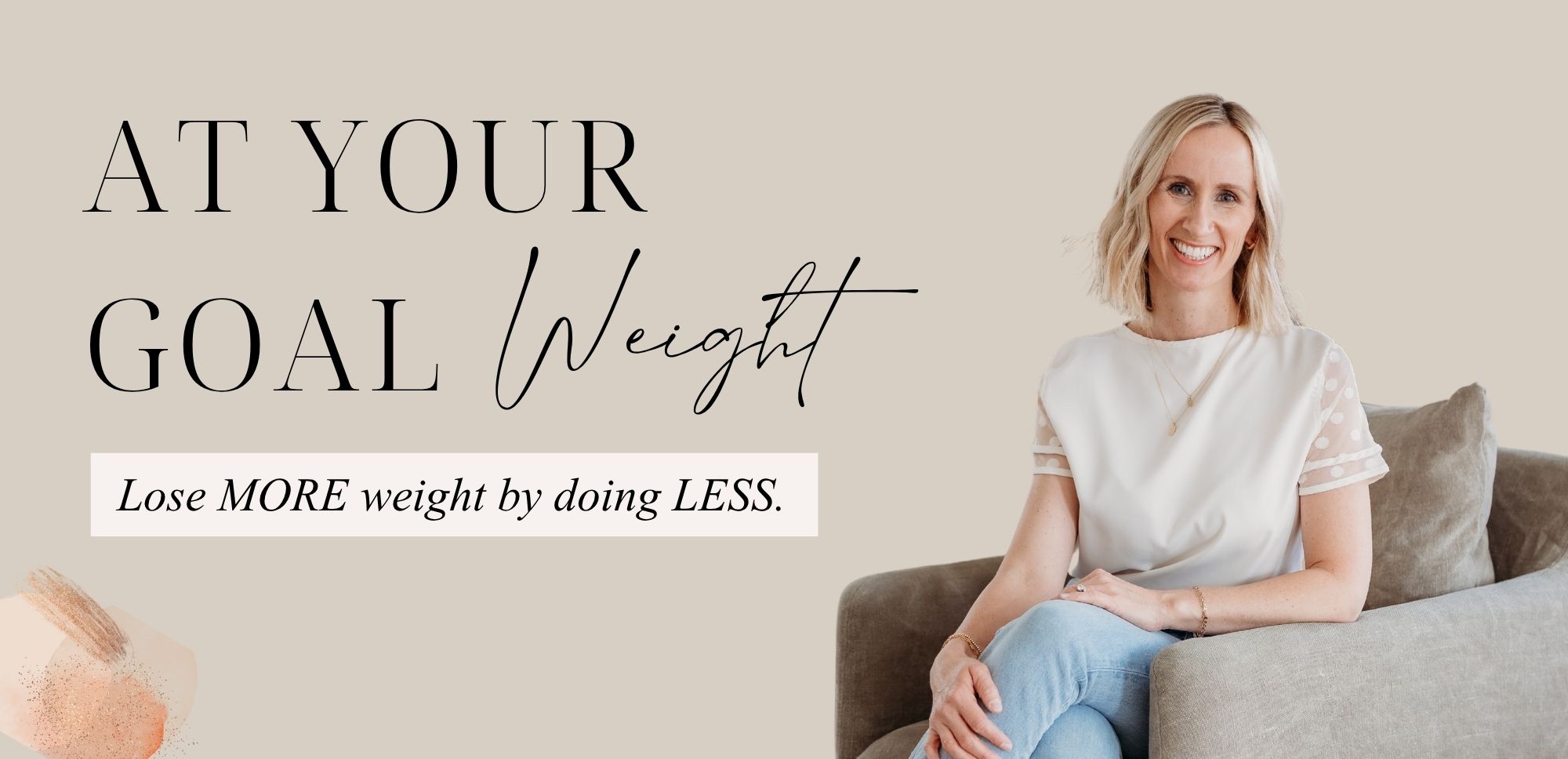

I lost 50 pounds in 4 months after having my third baby. At the time of writing this, that was eight months ago, and I’ve maintained my weight the entire time—within about 1–3 pounds.
I did it under very busy, very constrained circumstances. And I want you to know this upfront: weight loss is probably much closer than you think if you’re willing to take a different approach.
Let me explain.
A Brief Recap Of My Weight Loss Story
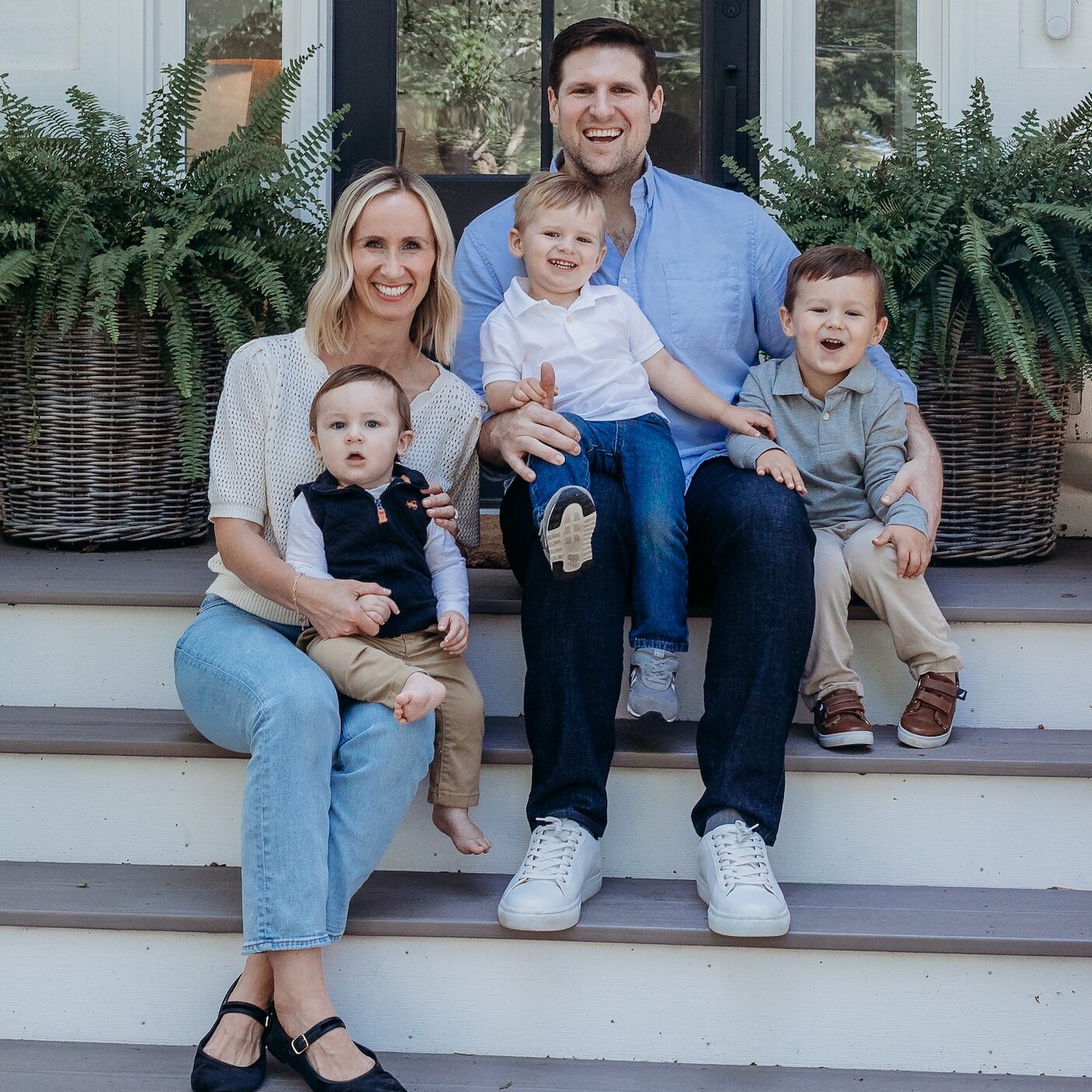
In case you’re new here: I lost 50 pounds in 4 months after having my third son, Jack, while running a successful coaching practice and being the primary caregiver for my three boys under four years old at the time.
Translation: I had very little time.
I share this because I truly believe I lost the weight with less—less time, less energy, and less margin than most people think is required. Your “less” may look different (we all have demanding lives), and that’s okay.
If you want to lose weight simply and permanently—without overcomplicating it—you’re in the right place.
What The Weight Loss Industry Gets Wrong
What infuriates me about the weight loss industry is how complicated it tries to make weight loss.
You’re told you need to exercise.
You’re told you need to overhaul your eating habits.
You’re told you need to count calories or macros.
You’re told to food journal.
You’re told to track everything in an app.
You don’t.
The industry has convinced women that weight loss requires constant monitoring, data tracking, and micromanaging food choices. That the only way to lose weight is to turn eating into a full-time job.
For smart, high-achieving women, this creates a very specific trap.
When weight loss feels hard, your brain assumes the answer is more precision. More tracking. More rules. More effort. So you add layers of complexity that make weight loss feel heavier instead of lighter.
Here’s the truth most programs won’t say clearly: you do not need to count calories, track macros, or log your food to lose weight.
Those tools can be useful in some contexts—but they are not required, and for many women, they make weight loss harder, not easier.
When you understand what actually drives weight loss, you can let go of the tracking, the apps, and the constant mental load—and weight loss becomes simple again.
Resources:
- How I Lost 50lbs (free training)
- Weight Loss For High Achieving Moms (Audio Program)
- Weight Loss Coaching With Natalie (1:1 Weight Loss Coaching)
Why Smart, High-Achieving Women Overcomplicate Weight Loss
When smart, high-achieving women struggle to lose weight—or lose it and then gain it back—their brain draws a very logical conclusion:
If this were simple, I would have figured it out by now.
So the struggle itself becomes proof that the solution must be complex.
That’s when weight loss turns into something that requires more rules, more tracking, more precision, and more effort. Calories, macros, apps, journals, and ever-changing plans start to feel necessary—not because they work, but because they feel like the level of complexity a “hard problem” should require.
The irony is that intelligence becomes a liability here.
Instead of simplifying, smart women assume they need a more sophisticated system. They overcomplicate weight loss not because they’re incapable—but because they’re capable and used to solving problems that way.
Weight loss doesn’t respond to complexity. It responds to consistency around a few simple principles.
Once you stop assuming the solution must be complicated—and start questioning that assumption—weight loss becomes far more doable.
Why Weight Loss Is Actually Very Simple
Weight loss is simple because, unlike many other goals in life, it depends almost entirely on you.
Starting a business depends on the market.
Writing a New York Times bestseller depends on people choosing to read it.
Getting married depends on another person wanting the same thing.
Weight loss doesn’t work like that.
Weight loss depends on one thing: how much you eat.
There’s no external approval required. No market conditions to wait for. No one else’s behavior that can block your progress. When food intake is aligned, the scale moves. When it isn’t, it doesn’t.
This is why weight loss is so misunderstood.
Because it feels emotional, personal, and frustrating, women assume it must be complex. But biologically, it’s straightforward. The body responds to energy intake. Every time.
Once you understand this, weight loss stops feeling unpredictable or out of your control. It becomes something you can manage intentionally—without apps, tracking, or constant mental effort.
Simple doesn’t mean careless. It means direct.
And when weight loss is direct, it becomes doable.
- Related: Weight Loss Mini Course – My course on how I lost 50 lbs after having my third baby.
The Exact Weight Loss Approach I Used
I focused on one thing: creating a calorie deficit.
I did that using simple, repeatable tools I still teach today—tools that didn’t require tracking, apps, or overthinking.
I used a Hunger Scale to guide when and how much I ate. I practiced Mild, Doable Hunger instead of trying to feel satisfied all the time. I stopped eating late at night. And I made small, daily tweaks based on the number on the scale.
That was the work.
There was no exercising. No calorie or macro counting. No food journaling. No overhauling what I ate.
Just consistent adjustments based on real feedback.
This allowed weight loss to fit into my actual life—with three little kids, limited sleep, and very little extra time. I wasn’t managing weight loss all day. I was making a few intentional decisions and moving on.
Translation: I ate less.
And because the approach was simple and repeatable, the weight came off quickly—and stayed off.
Resources:
- My Weight Loss Journey Losing 50lbs In 4 Months After Having My Third Baby (Blog post)
- How I Lost 50 Pounds After Having My Third Baby (In Just 4 Months) (Blog post)
- Weight Loss For Moms (And My Weight Loss Journey) (Podcast)
- How I Lost 50 Pounds In 4 Months After Having My Third Baby (Podcast)
How I Help Other Moms Lose Weight The Same Way
After losing 50 pounds myself and maintaining it, I created two ways for high-achieving moms to learn this approach—depending on the level of support and structure they want.
The mini course, How I Lost 50lbs in 4 Months After Having My Third Baby. This is where I walk you through exactly what I did—how I thought about weight loss, how I approached eating, and the simple tools I used to create a calorie deficit without overcomplicating it. It’s designed to show you what’s possible and give you a clear, grounded starting point.
If you’re ready to stop overthinking weight loss and start approaching it in a way that actually works, this programs will meet you exactly where you are. I’d love to see you inside!