Overwhelm has become one of the most accepted narratives in motherhood. So many moms believe their life is just supposed to feel like a lot all the time. But overwhelm isn’t only about how much you have to do — it’s about how your brain is interpreting what you have to do. In this episode, I’m breaking down what it actually takes to drop the overwhelm story, why high-achieving moms hold onto it longer than they realize, and the specific shifts that allow you to have a full life without feeling like it’s too much all the time. If you’re ready to stop living in constant overwhelm, this episode will show you where to start.
If you’re a mom, you’re in the right place. This is a space designed to help you overcome challenges and live your best life. I’d love for you to join me inside the Mom On Purpose Membership where we take this work to the next level.
Listen to the Full Episode:
Show Resources
- If you loved what you heard on the podcast, check out my Mom On Purpose Membership.
- Grab my free Podcast Directory for the best episodes to listen to, listed by category.
- Come find me on Instagram so we can connect.
- Sign up for the Mom On Purpose Weekly Newsletter to get a tool, tip, or resource sent to your inbox every Thursday.
- Call the Podcast Hotline here: 8-333-ASKNAT (833-327-5628)
Full Episode Transcript:
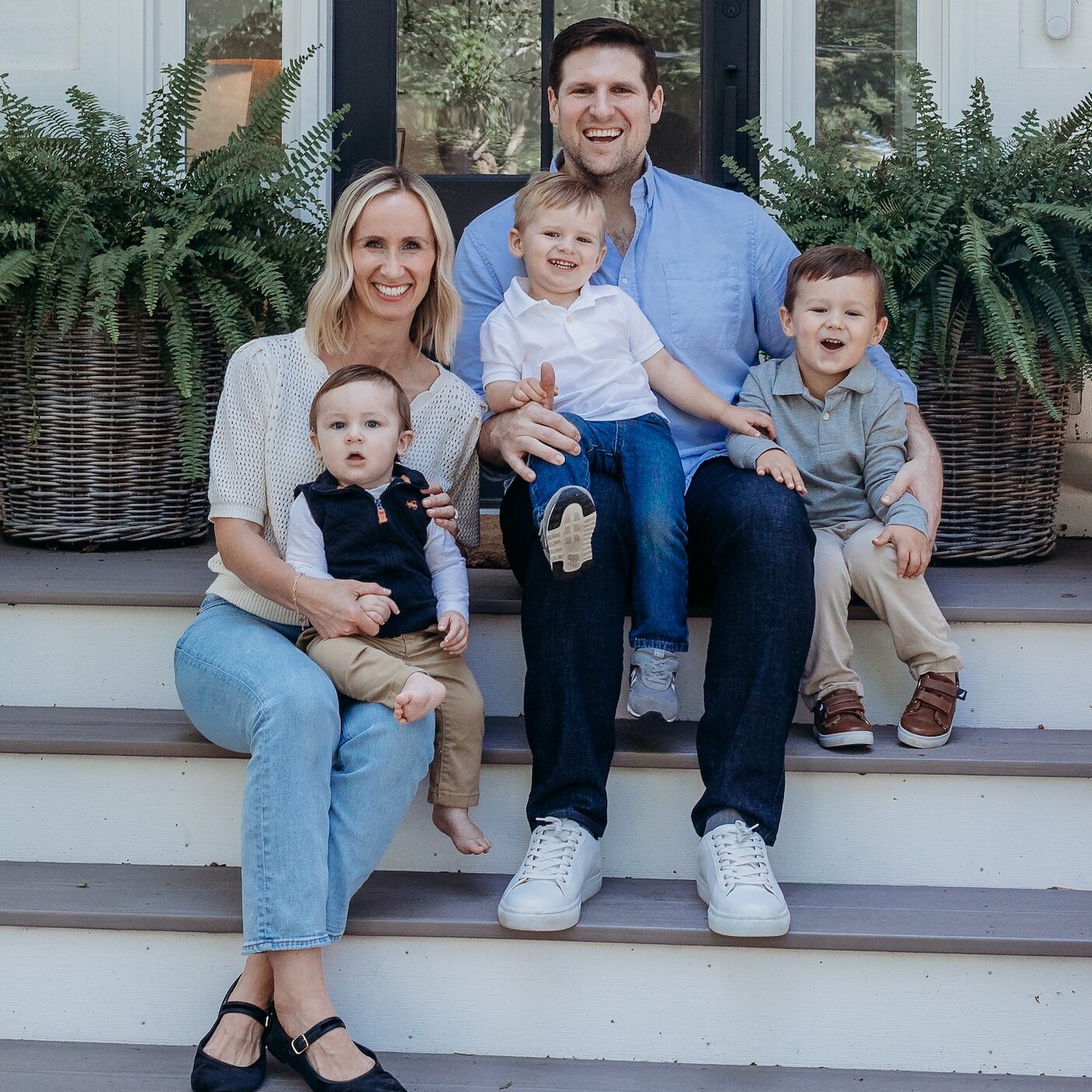
Welcome to Mom On Purpose, where it’s all about helping moms overcome challenges and live their best lives. My hope is by being here, you are more inspired to become the mom you are made to be. I’m Natalie, your host, a wife, boy mom, dog mama, Chicagoan, and former lawyer turned professionally certified coach. If you’re here to grow, I can help. Let’s go.
Hello, my beautiful friends. Welcome to the podcast. I am so happy to be here with you. I am just loving the cadence of doing weekly podcasts. It felt like I was missing my right arm when I was, not publishing them publicly. And I’m just really glad to be back. So happy to be connecting with you and sharing all of these life changing tools. There is not a day, not a single day that goes by probably because I have three kids under five years old that I do not use these mental and emotional tools to just make motherhood easier and lighter and reduce the friction.
And, you know, they’re very, very practical and that’s why I’m so passionate about them. And today I want to talk with you about overwhelm specifically and kind of the overwhelm narrative. I definitely think that there’s this like cultural kind of connection point that we have about being overwhelmed during this season. It does not matter if you are postpartum. It does not matter if you have school-aged kids. It does not matter if your kids are seniors. It’s like regardless of the actual season, there is an excuse to buy into the overwhelm narrative. Like this is just a busy season and there’s just a lot going on right now. And like yes and no. And so that’s kind of what I want to talk with you about today because I think this is like a blind spot in our awareness. And I think it’s because of the connection that we have with other moms.
And like, I’ve been doing this work for almost a decade, and I even fall kind of into that trap. So for example, like when I’m waiting in the preschool line connecting with the other moms, just kind of making small talk very commonly will someone say something about like, never getting a break or, you know, they’re just kind of in this wild phase and it’s just so much and like there’s opportunity to connect over being overwhelmed and like, we want to connect, right? We want to be included in the pack. That’s just like a normal part of being a healthy human being. And so when you don’t understand kind of the cost of doing that, then I think that’s just what you’ll do. That’s what we all do. That’s why relatable mom content is so popular. And that’s not to say that you’re not actually experiencing overwhelm, but there’s a difference between validation and actually helping yourself.
So validation is useful, but it’s not always helpful. And so just kind of knowing that that’s a topic for a different day, but that’s kind of why I try my best to unfollow and to not consume relatable mom content as like funny and hilarious and validating as it is. I know that if I consume way too much of it, it’s actually very unhelpful it doesn’t make me a better mom at all. And so it’s, it’s kind of similar with overwhelm and like this overwhelm narrative. And I want to talk about kind of what it specifically takes to kind of step back and say, you know what? Like, I’m just not going to relate in that way. And I do think it kind of starts with really knowing what overwhelm actually is, right? So I, I’ve talked about this a lot before, either on the podcast or inside the Mom On Purpose Membership where I really teach like the difference between overwhelm and overstimulation.
So overstimulation is generally physical. It’s like the noise, the touch, the interruptions, the chaos. Like it’s just too much for your nervous system at once. And you solve for that one way overwhelm is different. It’s mental, it’s the thinking pattern that like, I have too much to do and I can’t handle this and there’s more than I can manage and I’m behind and I can’t keep up. Those are kind of like more overwhelm thoughts. It’s more of like a mental experience. You feel overwhelm in your body, but it’s not coming from overstimulation. And so just differentiating between those super important because you solve them differently, a lot of times it’s like, it’s so important to me to point out why it matters because it’s like, okay, do we really need to talk about definitions? And I always step back and think like, okay, is this helpful for me?
And I just think of my life. I’m like, actually, yes, it’s very helpful because you know, when it’s chaotic and my three little boys are fighting and it’s witching hour, if I try to think about a better routine or mind management, I’m never going to increase my capacity to feel calm in the chaos because that’s solving overstimulation with overwhelm tools, which you can’t do. So again, kind of a tangent kind of a topic for a different day, but it’s helpful here to just know that like what’s required to drop the overwhelm narrative is knowing what overwhelm actually is, right? Because you’re not going to be able to drop it if you’re thinking that it’s overstimulation. So you gotta separate the two. And like in this podcast, I’m just talking about overwhelm, overwhelm again, being like that mental chatter of like too much to do. This is all too much.
I can’t handle this kind of thinking. And it can be like really subtle. Mine are like at the end of the day sometimes. And and making sure that you have the tools to kind of help with that is part of it. But again, I think there’s this narrative out there where we buy into overwhelm regardless of our access to the tools. And we do it because of this like cultural connection. And so are you willing, that’s another part of this to stop glorifying overwhelm. And it sounds like, of course I don’t want to glorify overwhelm, but you know, and this is where the difference between like validating your real experience has to be separated from like that connection point that you might be seeking and using overwhelm as a way to connect, right? Other people do this with negativity. I used to be one of those people, no judgment at all.
But when you clean that up, you start to realize like, what do I want to connect over? I don’t want to connect over gossip. I don’t want to connect over, fill in the blank, like all these other negative things I want to connect over. I don’t know my goals, my relationships, what I’m enjoying. My kids, like fun things. I don’t know, just more positive things. So like just asking yourself like, are you willing to stop glorifying connecting over overwhelm? Because I don’t know, I just think that overwhelm is almost expected as a mom, and because of that, it’s easy to bond over it. Like I said, I am, no exception to that, but like I’m super aware of it because I’ve been utilizing these tools and it doesn’t mean like, I’m like, oh no, I, I can’t talk to you because I don’t talk about overwhelm.
Like it’s not rude. But what am I adding? Am I pivoting the conversation a little bit or am I adding like what I find to be really helpful and sometimes the only way that I’m willing to do that is, is if I’m willing to feel vulnerable and even risk the connection moment. Because if other people really want to connect over like how overwhelming motherhood is, then guess what? You might be rejected when you do that. I, I forget who it was, it doesn’t really matter it was probably a few months ago I saw someone who I was following on, I think Instagram maybe, and she had written something about like just wanting more authentic conversations and motherhood and I just like loved that, right? Who wouldn’t, who would say, no, I don’t want any more authentic conversations. Of course we want authenticity, but like once I dove into that a little bit and what she was saying, she actually wanted more negative conversations.
And it’s so interesting, right? Because if we think authenticity means sharing the negative, then what we’re going to do is we’re going to glorify even more what overwhelm is. And so this is where I think, I don’t know, it’s like a high achieving women who are just so self-aware can actually miss this and not even see that this is a blind spot in their self-awareness. Like I guarantee you these women, like who she was having conversations with in her like little interview spot on, Instagram, I guarantee you they would identify as like very self-aware and to some extent they are. But what they didn’t see was that they were equating like authenticity with talking about the bad stuff, talking about the hard stuff, talking about, like how overwhelming motherhood is. And that’s just a mindset, that’s just a perspective. So, you know, like all of this work, right?
It’s not toxic positivity. Circumstances are always neutral. So it’s not like, oh, this is a negative, circumstance and we’re going to add on positive thoughts. Okay? That’s kind of the toxic positivity. So you really have to be doing this work to kind of understand what I’m talking about. But it’s so important because otherwise we see a post like that and it’s like, yes, I want more authentic conversations. And then you get into this community and it’s like, oh, by authentic you actually just mean complaining. Like let’s have a safe space to complain without offering solutions. Now I’m all about like, hey, let’s talk about what’s real and then offer solutions and tools. But that’s not what this was. This was like, you know, assuming that social media is just all positive and now let’s create a space where it’s actually negative. And so it was very clearly glorifying the busy glorifying overwhelm, and then like labeling it authentic.
And so you really have to just use your own discernment around communities online and in person and anywhere, right? And it’s so, it’s so human. It’s just the first thing that came to my mind, right? It’s like it’s so human because the primitive brain is wired for survival, which means it’s wired to scan for the negative. It is not wired for happiness. You actually have to do work and exercise your brain to look for the good because if you ignore the bad, you will die, right? That’s what your survival base brain thinks. And like out in the wild and evolutionarily that was true. And so now even it’s important for like, if you, smell smoke, it’s important your brain pays attention to that there might be a fire. But in our everyday lives, thank goodness, such a privilege that, what we are scanning for now is not actually as dangerous as our brain is making it out to be.
That doesn’t mean it’s easy and everything’s perfect, but like what’s your narrative around motherhood? That’s really like the, the crux of what I want you to just consider. Not to like blame yourself, not like you’re doing it wrong, but just like, let’s step into the next identity of like, I’m just not an overwhelmed mom. I just like refuse that. I refuse to identify as that I refuse to,identify as busy. And again, that doesn’t mean that like everything is perfect and my kids just never have tantrums, and all the things, right? I’m living a very full life running my practice, primary childcare, balancing all of these things with my three little ones. And like I could easily go into overwhelm, but I just refuse it. I just refuse it. Like it’s totally fine if the beds are unmade, it’s totally fine if, you know, I don’t get everything done.
Like there’s no race, there’s no finish line. ’cause I’ve done so much mental work. Like it is mindset work, but it’s not like affirmations my friends, it is the actual practice of looking at my thoughts and being willing to be wrong about them. And so it’s like, are you willing to be wrong about your overwhelmed story and I, and I think this is a skill that really is required for all thought work. And if you can just like adopt the identity of wanting to be wrong about your thoughts that don’t serve you, you will like quantum leap in terms of getting new and different results. What I mean by that is if you are willing to be wrong about how you’ve been thinking about something very quickly, then very quickly you will jump into the new identity that you want to have. You know, use weight loss as an example, right?
I coach clients to lose weight the quicker they are to adopt the tools that I offer to them, the more quickly they get the results, the more resistance they have, the longer it takes nothing against them. It’s like the primitive brain wanting to be right about the story of like, no, it’s too hard for me to lose weight. It always has been this hard. And so if you have a story about, you know, I’ve always been overwhelmed, and, and this season of life especially, and if you’re unwilling to be wrong about that, I’m not saying you go to the place of, of the exact opposite end of the spectrum where you’re like, oh yeah, like life is, easy peasy and I never experienced any negative emotion. That’s not what I’m saying, right? That’s the all or nothing thinking. Instead in the middle it’s like, okay, maybe the way that I’ve been thinking about my overwhelm story isn’t serving me, so I’m just going to let that go.
And again, like the more thought work you do, the easier it becomes to let go of your stories and being willing to be wrong about them because you see that the stories that you have in your mind create the quality of your life. And so why wouldn’t you want to be wrong? Like, you know, our, our brains are just future predicting machines,, and there’s no way around that. But oftentimes I like to remind myself, and I might be totally wrong about this and that’s totally fine, completely fine for me to be wrong about this. This is what I think is going to happen. ’cause it’s kind of hard to stop that part of your brain from making predictions, but just reminding yourself, and I might be totally wrong. And so bringing it back to the present, it’s not that you’re going to invalidate your experience, that’s what I want to be clear about, but it’s that you’re going to tell a different story about it.
So here’s how I do it. Instead of buying into the overwhelm narrative, like it’s so overwhelming, there’s just so much, right? It’s like, okay, I am no longer going to associate my identity with overwhelm because it doesn’t feel helpful. It doesn’t help me align with being the mom who I want to be. So that’s step one. Okay, so what is true? What else is true? How else might I describe what I’m experiencing in a more helpful way? Not in a more positive way, but in a more intentional way, right? The overwhelmed story, is something that comes from the primitive brain and it’s sort of like exacerbated by just the connection that we get from others who will also describe it as that, right? It’s like they’ll add fuel to that fire. So when you have to take a step back, it’s not that you’re now going to tell a story that feels fake and untrue for you, but you’re going to use your brain to come up with a more helpful empowering story.
So I like to think I’m a mom who has a very full plate and has a lot going on because I’m high achieving and I like that. And I can always redecide. I always have agency to think and feel and act however I want. And sometimes as part of the life that I want to create, there are responsibilities that I choose to take on that are not my favorite thing. It is not my favorite thing to be responsible for meals three times a day. It’s not my favorite thing to, you know, do like kind of the house manager CEO tasks all the time. And even if you know, a lot of those are outsourced, it’s still like managing that part of it or the laundry, or coming up with all the stuff for the holidays. I do really enjoy that, but it takes more time and I use my time for that and thinking about it in the way of like, there are things that I choose to do because I choose to have all of the amazing things I have in my life, like a spouse and a home and two dogs and three kids and all of the things.
And part of that means there are responsibilities that I choose to take on. I could abandon, I could neglect, but I am Natalie and I choose this life and I choose to do all these things. And sometimes I mismanage my time, sometimes I don’t schedule in enough self-care. Sometimes, I realize, wow, I took on too much. And so it’s not, oh my gosh, I’m so overwhelmed. It’s let me check in with my mind and my body and see what’s really going on here. Also, for me personally, I don’t find the word overwhelmed to be extraordinarily helpful. I find it to be vague and broad. And when we use vague and broad words to identify a problem, the solution is then vague and broad. And so for me, what’s very helpful for me personally is to say like, okay, what’s actually going on here? And you’ve heard me say this before, perhaps nine times outta 10, it’s like, oh, I’m not overwhelmed, I’m just tired.
Okay, it’s part of it, right? You have three kids in three years, it’s six o’clock at night, you’re going to be tired. Okay, it’s fine. It’s not a problem to solve even. But that’s a very different experience for me to quickly go through at 6:00 PM in my mind versus, this is too much. I’m overwhelmed, kind of it, it’s like low grade catastrophic thinking. Now, I would never describe myself as having catastrophic thinking, but that’s like kind of what it is when you really break it down. So I’m saying that because if you’re someone who’s like super high achieving and you don’t identify as having any catastrophic thinking, just think of it as like, or overgeneralizing, same thing. It’s like, you might not even be aware that some of this language is going to perpetuate that. And so for me, whenever the word overwhelm pops in my mind, I ask myself like, what’s really going on here?
And for me, I like to get really specific. Like, do I need to plan better? Do I need a nap? Am I tired? What kind of hard is this? You know, what do I want to say no to? What do I want to say yes to? Like basically just getting more specific with what’s going on. Did I plan properly? Do I, you know, do I have more things planned than I ought to do? I need to redecide. Really empowering myself there. And there’s just no space for overwhelm when you do that. Now there’s space for being tired or being exhausted, but it’s kind of like running a race or doing like hard things, right? There is the, the downside of that, you go to a great workout class afterwards, you’re tired, your muscles hurt, you’re like, wow, like that was a great workout.
Okay, that’s, it’s very similar to it experience of taking on a lot and having a high capacity, being like a high capacity woman. So I want to encourage you to drop the overwhelm narrative, but I just want you to know like what is required, it, it does, require you to change your identity to be willing to be wrong, to stop connecting over it and which can feel kind of strange at first. You know, especially with other moms, if they’re talking about how crazy life is, how busy they are, how overwhelmed they feel like you don’t see yourself in that story anymore. So it can feel like just slightly isolating. But I want to encourage you, it’s kind of like if you, if you don’t drink, like I don’t drink when I’m being around other women who do drink, I don’t feel isolated because I’m so used to having a mocktail.
And so there’s just this period where you might be transitioning from someone who drinks to someone who doesn’t drink. And it might feel a little awkward at first before you find your footing of like, oh yeah, this is how I order a mocktail. Same thing with overwhelm. It’s like you’re used to relating and connecting over being busy and overwhelmed and you’re going to stop doing that. And so finding your footing in the language that you use in the conversations that you have in what you add or how you pivot the conversation or how you support them and validate them without kinda, isolating yourself, it will take a little bit of practice. But that’s a good thing, right? It, it’s unfamiliar, but that’s what literally the the phrase get outside your comfort zone means it’s growth. It’s you choosing kind of with clarity who you want to be as a mom instead of reacting to your environment, to, social media, to the other moms, to kind of what society suggests.
And I’m telling you, this is just like one shift that will make such a big difference in your everyday life. Like that word is just not a part of my vocabulary. Now, I might feel tired, I might feel overstimulated, but I really do work on that as well. But I use the tools of mind management. I use the tools of time management, right? My time freedom framework, my time freedom method, it really, it’s like a fallback for me in my mind where I know that overwhelm is just not an option. I don’t use it in my identity. I always know that I have agency to redecide and then I make sure that I’m using my time freedom tools to plan properly, right? And then the rest is just mind management. So I’m not planning 36 hours of things in 24 hours in a day.
I’m not going to do that to myself. And I, do think, again, like what it takes to drop the overwhelm narrative. It’s like if you’re a high capacity woman and you’re used to like a lot of external validation and doing everything for everyone always, then like your capacity cup for a day is probably overflowing. And again, you can glorify that in a way that is unhelpful and probably unhealthy. And so part of dropping the overwhelm narrative is to really take a look at your capacity for a day and make changes that allow you to feel more grounded and present and connected. Like I used to be someone who was go, go, go all of the time in my doer energy all of the time, and I am just as if not more highly productive now and I don’t experience those feelings and it’s because I take my time more seriously.
I, have much better like self-love practices. Like I’m not going to do that to myself, right? We, are always going to be creating more full lives because like what a beautiful opportunity it is in this lifetime. And so because of that, I don’t want to go through every single season feeling like manic feeling, fried feeling like this fren of the time. I want to feel calm and connected and present and grounded and be able to produce at an extremely high rate without overwhelm and just dropping that overwhelm identity and that narrative. It is such an opportunity for growth. And so what I want you to know is that overwhelm does not have to be a part of your motherhood experience. It does require certain skills, specifically brain management, which includes like that identity work and includes being willing to be wrong about your thoughts and includes getting like more specific with the words that you’re using so you can come up with specific solutions.
It also includes like that time freedom framework that I really live by. So you are planning what’s important to you and what’s a priority to you and making space for you to recover meaning making space for you to rest and have downtime and not needing so much external validation for “doing it all”. And I’m someone who does a lot, but now I can make better decisions about my time and take care of myself and have a lot more kind of,, white space on my calendar because I’m not thinking that I have to do everything for everyone always all of the time. So a lot goes into this, but I just think it’s something that like really needs to shift in the way that we just live as moms. Like just imagine if everyone listening to this, there are thousands of you just decided to do this overwhelm work and just drop the overwhelm narrative, life changing and like the ripple effect.
It’s just, oh my gosh, I just think about the experience for your kids to have a mom who just like didn’t identify as overwhelmed more play more lightness, but still like high achieving in whatever way that you know manifests for you. It’s so beautiful. It’s just why I’m so passionate about this work. And of course, come and get coached by me every single week so you have the coaching in your ear to hear exactly how you can rewire your brain and use these tools to do that. Alright, my beautiful friends, you can join me over at momonpurpose.com/coaching for that. And I will talk with you next week. Take care.
Enjoy the Show?
- Don’t miss an episode, follow the podcast on Apple Podcasts or Spotify.
- If you haven’t already, leave a review in Apple Podcasts.