A conversation I had with a coach of mine (who’s also a mom of four) completely changed the way I think about spending money on myself and my family. In this episode, I’m sharing what she said, why it stuck with me, and how it challenged something I didn’t even realize I believed about motherhood.
Get my free masterclass here: How I Lost 50lbs After Having My 3rd Son
Listen to the Full Episode:
Show Resources
- If you loved what you heard on the podcast, check out the Mom On Purpose Membership.
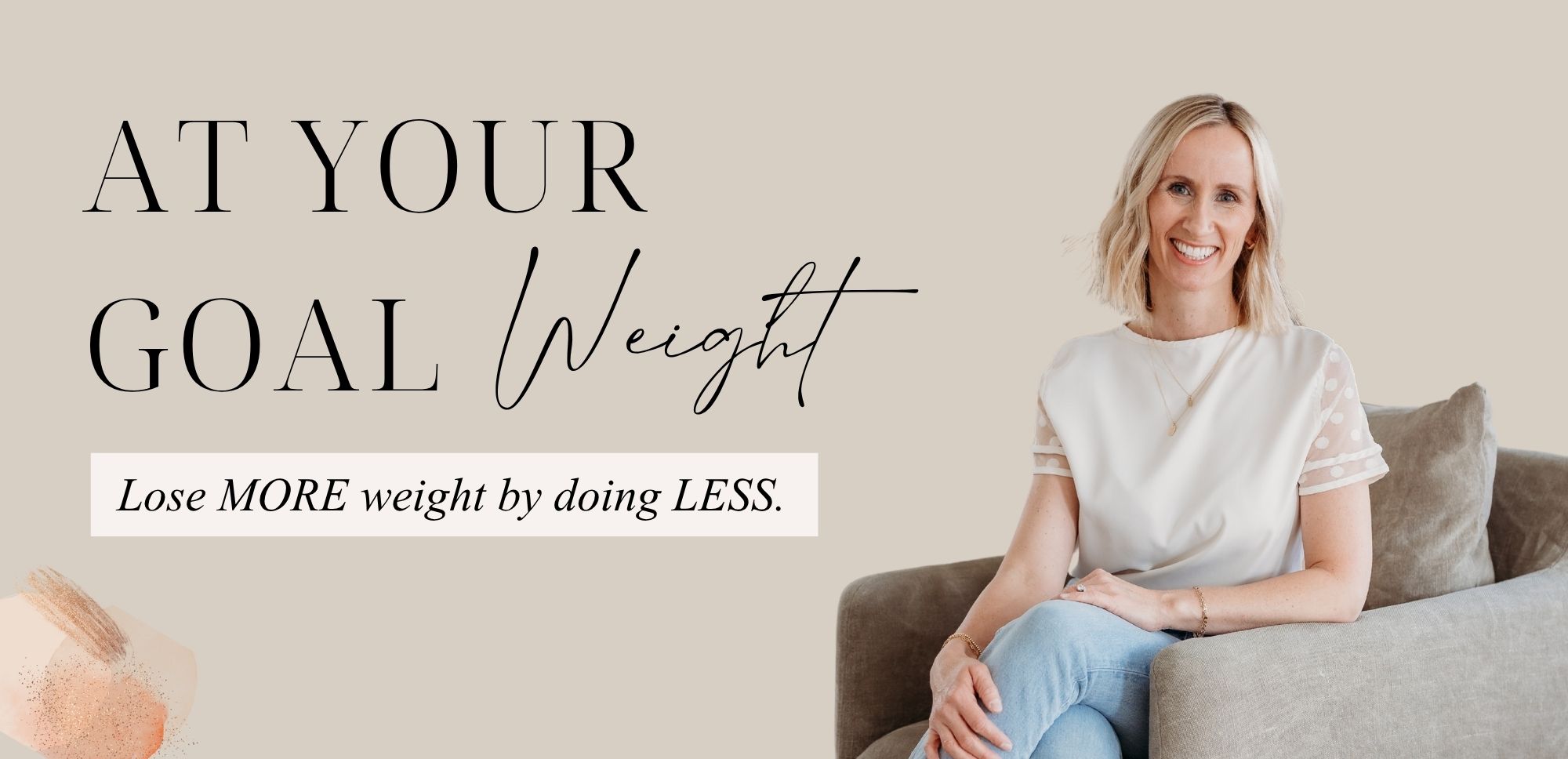
- Want to lose weight? Join my weight loss program here: At Your Goal Weight
- Come find me on Instagram so we can connect.
- Sign up for the Mom On Purpose Weekly Newsletter to get a tool, tip, or resource sent to your inbox every Thursday.
Full Episode Transcript:
Welcome to Mom On Purpose, where it’s all about helping moms overcome challenges and live their best lives. My hope is by being here, you are more inspired to become the mom you were made to be. I’m Natalie, your host, a wife, boy mom, dog mama, Chicagoan and former lawyer turned professionally certified coach. If you’re here to grow, I can help. Let’s go.
Hello, my beautiful friends. So happy to be here with you today to talk about a topic I’m very passionate about, taking up space in your budget as a mom. Before we dive in, I want you to run on over to momonpurpose.com/50down and watch my brand new free masterclass on how I lost 50 pounds and how you can lose more weight doing less. And the reason that I’m sharing with you that it is brand new is because week after week, I am remaking this entire masterclass to make it better, to help you get results in an easier, faster way.
So maybe you took it months ago, maybe you’re brand new, you’ve never heard of it, maybe you’re thinking about taking it. Now is the best time because it’s the newest, best information in there. And what you are going to get, number one that I think is just worth the entire masterclass and your devoted time in and of itself is the biggest mistake that my high achieving mom clients, and that is you, if you are here listening, you’re a doer, you have a lot on your plate, you have a very demanding life, all of my high achieving mom clients fall into this trap and this mistake that leads you to kind of hovering around weight loss, like you’re losing a few pounds here and there, it’s taking a long time, you’re not really sure why, maybe you’re in the cycle of losing and gaining the same weight.
I address that head on and you’re going to find out why that is and exactly what to do to solve it. I also share with you my method for weight loss that works really well in demanding circumstances. So I lost 50 pounds in four months after having Baby Jack. It’s been almost two years now. I’ve talked to you about that before. But what I share with you in this masterclass that’s different than anything I’ve talked about before is the actual three steps from a macro perspective that you need to be doing in order to make weight loss permanent in your already demanding life. And I feel like if you can do that right now during the busiest time of year, then you really can make it permanent, right? The first two weeks of January, it’s like everyone can lose weight then, right? And so instead of, kind of trying to get your circumstances to be perfect in order for you to win, which means you won’t be able to win, I want you to think about how you can do more in more challenging circumstances.
And I don’t mean busy yourself, I mean get greater results. So you probably know this, but one of the questions I would ask myself is how can I lose more weight doing less? And guess what, my friend? The person you want to hire for helping you solve a challenge is the person who consistently was able to create a result with less, okay? That’s the person I want to hire. I don’t want someone telling me that I gotta do a thousand things in order to lose weight. I want someone giving me the cheat code. Why? Because I have a very demanding life. And so that’s exactly what you’re going to get inside my three steps to how I lost 50 pounds in four months and how you can lose more weight doing less, momonpurpose.com/50down.
If you take that masterclass, DM me and let me know. I would love to connect with you to hear your weight loss , what you’re doing right now, what’s not working, uh, why right now is the right time, and anything else that you want to share with me, it’s Instagram, mom.onpurpose. Okay. Now let’s dive in. Taking up space in your budget. I have some thoughts. First, I want to add some context here with a story. Years before I ever became a mom or got married, I had a coach and she’s married with four kids. And she said something that at the time seemed kind of wild and dare I say just like really blunt for me to hear. And she said, “I spend more money in our family budget on my own skill development, on my own goals, on what’s important to me than I spend on any of my kids, including like their activities, their travel sports”, the things that they invest in for their kids as a family individually, each one of them, is thousands of dollars per year.” And you know what she said?
She said, “Not only do I invest more in myself relative to each of my kids,” she said, “but it’s exponential.” She said, “So matter of factly, yeah because the stuff that I want to do that matters to me, it’s just a lot more expensive.” And the way that she said this without any mom guilt, without any justification, stuck with me so much because she said, “What message am I sending if there’s no line item for me in our budget?” I’m sending the message that mom’s invisible, that the only reason for my existence is to take care of, to serve, to pour into my family. And this is a woman who I would describe is very motherly, who loves and adores her family and puts her family first. And to hear her just so matter of factly, so bluntly say, “Yeah, kids’ activities and their sports and their travel stuff is all very expensive, but you better believe that my stuff is way more expensive.” She just said it because, you know, adult stuff, working on my goals, my skills, the tools that I want to get better at, it’s just more expensive.
And so of course I spend more on myself. And that was years ago and it really stuck with me. So to this day, it has been a value of mine to prioritize spending money on my own goals, my own skill development on things that matter to me. So I think that just the way that we’ve been socialized and part of our culture, it’s very normalized to spend money on vacations for families. Like I’m a part of these Disney Facebook groups and you’re dropping, you know, 10, 20, 30K potentially, you could easily on a Disney trip, you know, travel, sports and any sort of kids activities, easily you could spend a couple grand a year, we do, for each of our kids. And that has been normalized. And I also do think that we’ve gotten better with normalizing investing, in ourselves when it comes to some things for our physical health.
Maybe it’s Pilates or maybe it’s, you know, going to brunch with a girlfriend or maybe it’s clothes. But it’s just really interesting to me because what we haven’t normalized and the reason that I wanted to do this podcast is normalizing investing in skill development and goals. And I’ll even put hobbies in there. I don’t think that is necessarily something that we talk a lot about, that we, make sure to do as moms. Just think about your willingness to spend a certain amount of money on a kid’s activity that maybe your child is showing some interest in relative to your own. I remember years ago, I was talking with one of my sisters-in-law and she was saying this exact thing. She’s like, “I was hesitating to enroll in a membership that was like $100 a month. But if you would have said, Oh yeah, you know, my daughter’s interested in this new dance and it’s, you know, $100 a month, I wouldn’t have even thought twice about it. But because it was for myself, I was questioning whether it was worth it. And that’s really what I’m talking about. I want you to think about yourself and your spending on your goals at least in the way that you think about it for your kids. So instead of maybe you have three kids, you say, okay, there’s three kids plus me and my spouse, so there’s five of us. What is the budget for all five of us individually for our goals and our skill development? What also comes up from time to time that I think is fascinating is this desire to just figure it out on your own. So for example, I’ll just use my weight loss clients. Could you figure out how to lose weight totally on your own? Sure. Like it’s, it’s possible for sure. Could I also cut my own hair? For sure.
Could I also teach my kids how to swim? You know, probably, maybe, right? But we don’t even question that. Like there is no chance, and I’ll get out, that I’m going to teach my kids how to swim, and I’m also always going to get my hair cut. And I want you to just think about the things that you value and pay for without even, you know, second guessing it or questioning it. But how do you think about investing in yourself for something that is a skill that you want to develop or that you want to work on or that hobby you’re interested in or a goal you want to work towards? Like when I think of skill development, I think of something like Mom On Purpose where you’re learning tools to develop skills, to work on those skills to keep your brain sharp so you can show up as the mom you want to be.
When I think of investing in yourself for a goal, I think of investing in At Your Goal Weight or, you know, some other program that we have at Mom On Purpose for achieving your goal. Like what is your budget for something like that? I want you to have that in mind. We have a new weight loss intake form for new clients and this is one of the questions because it’s so important that you are thinking about your budget for your goals. It’s kind of like, you know, I would never say like, “Oh, I need a haircut, so I think I’m going to pull up YouTube and order some cutting shears on Amazon.” Now, I totally realized that this is a privileged conversation. And also, we’re talking about moms listening to a podcast called Mom On Purpose. And so I do realize that some people are cutting their own hair and that it is very privileged to be able to afford haircuts and kids’ activities.
And I recognize that. And I also want you, as a high achieving mom who’s listening to this, to validate your own experience and your own challenges and not feel bad for having them and for having money. And I want you to care about taking up space in your own budget. So it might not be that you’re setting and achieving a weight loss goal. May you want to write a New York Times bestseller. What is your budget for that? If your kid comes up to you and says, “I really want to do travel baseball, like this sounds so fun and awesome.” The budget is a factor. If they tell you it’s going to take your entire budget, you’re probably going to say no. However, most of the time when our kids are interested in something that we think would benefit them and, and they care about whether it’s a sport or some other activity, the, the budget is not even close to the first question.
We’re like, “Okay, well, let’s look into it. Let’s see, if this is something you really want to do and if you care about and you wanted to go to the practices and participate and, see when the classes are and if it fits with our schedule. And also, you know, what’s the budget that’s, or what’s the cost of it? That’s a consideration, but it’s not something that is, the first thing like, okay, well, only if this is $10, right? And again, I think this is something we do to ourselves. We don’t do it, you know, with our kids’ activities, but we do it with things that are important to us and yet we haven’t even considered having a budget for it. And I think I don’t do this because of that coach years ago who just said it so matter of factly that like, of course she’s investing in herself.
Of course she’s a line item in her budget. Of course, she cares about her skills and her goals and her hobbies. And the budget reflects that. I also think that when we stop investing in ourselves for our own skill development and our own hobbies and our own goals, we are showing our kids that as soon as you become a mom, all of that hard work, all of that drive, all of that interest in what inspires you, what motivates you, what you want in your life, all of it goes away. When you’re a kid, when you’re in school, you are dreaming about your future. Now, I know some of you have kids and you’re like, “My kid is not dreaming about my future, her, her or his future.” Now, that may be true in the sense that you would first think of it, but I promise you they’re dreaming about something.
It might be, you know, not sports, but it might be something else that they really care about, even if it’s not something that you’re interested in. Kids know how to want. We are born with that desire. And I think as moms, what happens is we get into the logistics of life and we suppress that part of us. And I am a huge fan of bringing that up and opening up yourself to what you want for your future and then pursuing that. I’m not talking about at the expense of your kids. In fact, I do want to mention this. I like to think of it like a spectrum. So on one end of the spectrum, you’re not taking up any space in your budget at all. You’re making yourself invisible. The entire budget is going to your family and specifically in this area, it’s like your kids’ hobbies and their interests and their goals and their skill development.
Now on the other end of the spectrum, it would be like no money is going to your kids and their activities and their interests and all of the money is going to mom and dad. Now, to this day, I have not had a client nor do I know anyone where that is sort of the, the case. But I just want to make it clear that what I’m talking about is a spectrum. I’m not talking about you taking up all of the budget. I’m talking about, okay, maybe you need to think about it, not like, oh, well, I don’t need any of that. I don’t need to spend any money on that. Versus, okay, I’m going to think about it in the same way that I would think about it if I had another kid. So your kid comes to you and they want to go to band camp, and one of the questions that you’ll have certainly might be budget, but it’s probably not the first question.
It’s just a consideration. So think about how you go through the decision making tree for something that your child’s interested in and they get so excited about it and they really care about it and that makes you want to invest in that thing for them. Budget’s a consideration, but it’s not like the main thing, right? You think it’s, it’s doable, you’ll make it work, you’ll figure it out. Now, when something is important to you that you want to do, maybe you want to lose weight, instead of trying to YouTube it, order your own cutting shares and cut your own hair, let’s create a budget for you to pursue that. Just like if you had another kid who said to you, “I’m interested in doing, you know, some other camp,” you would find a way because it matters to them. Now, of course, there’s a limit to that.
We’re not buying yachts for our kids and, and going into bankruptcy for it. But like I’m talking to a high achieving woman, you know what I mean, where we energetically want to give our kids so much, but then we make ourselves invisible and what message is that sending to them and to you for your goals and your desires, because your goals and your desires matter, not disproportionately, right? I’m talking about a spectrum. I want you to think about yourself as another kid. If you have three kids and that you imagine yourself as that fourth kid who’s coming to you and saying, “I really care about this. This is something that I want to work on and develop and work towards and I have this goal.” Like you would find a way most of the time, not all of the time, but most of the time, certainly way more than you would ever do for yourself.
For ourselves, what I hear is like, “Okay, well, let’s just, maybe I can, you know, figure this out on my own.” Again, it’s like the example of, you know, YouTubing a haircut and ordering cutting shears. It’s like I would never, right?a It’s the same thing here. It’s like I would also not teach my kid how to swim, not because I don’t know how to swim, not because I can’t watch a YouTube video about how to cut my hair, but because those are things that I value and want to invest in. And all I am saying here is that I want you to consider yourself as someone who is worthy of taking up some space, not all of the space, but some space in the budget for your goals, for your interests, for what matters to you. I heard another coach say years ago that she wished her parents would have invested in something that was important to them, whether it was coaching or skill development or goals or counseling even, instead of taking them to Disney so often.
And it’s fascinating to me because I can so relate to this. And I want you to think about your childhood experience. Maybe you had a great one, but I think we can all relate to like the idea that we think we’re supposed to spend so much money, you know, tens of thousands of dollars on vacations, and yet we are not as trained and conditioned to think that that’s the kind of money we should be spending on our own skill and goal development. And I am not here to say that you should spend the same amount or tell you that there should be a certain percentage. I just want to bring more awareness to how as moms and as women, we tend to make ourselves invisible when it comes to our own skill development and goal development, when it comes to line items in the budget.
And that’s something that I don’t do. And it’s because of coaching and it’s because of the coaches who have come before me and have exemplified and modeled what it’s like to be a really great mom and to serve and to love their families while simultaneously pursuing their goals and their dreams, whether that’s in the home or out of the home, but feeling like their sense of personhood is fulfilled because they’re working on their goals, they’re working on their skill development and the things that matter to them. So what matters to you? Again, this doesn’t mean you need to take on something, you know, extracurricular that you’re not interested in. Just ask yourself what’s important to you. It might be a dance class that you would think, “Oh my gosh, I don’t even want to spend the money on that.” But if you had a fourth child who came to you and said, “Mommy, I’m really interested in this dance class,” you’d sign her up for it, right?
And notice the contradiction there with not doing that for yourself versus doing it for your kid, because most likely you’re not doing it for your kid to get some future payout where you’re like, “Well, maybe she’ll become a professional dancer and this will be financially worth it.” That’s not what we do. We see our kids showing interest in certain extracurriculars. We think there’s so much benefit for them to build community around that, to learn new skills, to learn what it’s like to be on a team if a team environment is present as well. There’s so many benefits and those benefits are still true and valid as adults. And again, this is just a perspective shift that I think can be very life changing. And I feel like I need to say this as a former financial expert and certified financial planner, I’m not talking about anything extreme where you are breaking the bank and, you know, getting into debt and not sticking to something that’s within your budget, which is why I love just the visualization of however many kids you have, imagine one more kid and that kid coming to you with the desire and the interest that you have.
So if you have three kids, imagine that you have four and the fourth kid is really you and you have an interest or a desire or a hobby that you’ve just said, no, it’s not worth the money or oh no, I could do that on my own or oh, you know, I gotta figure out a way to just like piecemeal this where you would never do that to your kids. If your kid wanted to learn, how to swim, you would never say like, oh, I coul teach you or let’s watch some YouTube videos. Never, right? You would be like, let’s find the best teacher local that can help us or let’s find the best class that we can sign you up for. We’ll start this week. I want you to have that level of enthusiasm. And I do think it’s important to mention here the status bump that we get from having our kids in activities.
It is something social that we get to talk about, that we feel good about. And I’m not here to change that, but I want to bring awareness to it for you because it’s unlikely that you investing in yourself for your own goals and for your own hobbies or pursuits or desires is going to feel that way because of the way that we’re externally validated. And so practicing validating yourself is so important. I feel so much better knowing that I am investing in myself and my goals and that’s helping me be more of the mom who I want to be and that I’m modeling taking up space in my family budget. Yes, I am taking care of my kids and investing in them and we are as a family and also mom’s not invisible in the budget. And it’s my job to validate myself for making those decisions again with Steve as well so that I feel good about it.
So I want to just offer to you a different perspective, a way for you to think about investing in yourself, a way for you to take up space in your budget for your goals, for your interests, for your hobbies without thinking about like, you know, what’s the return on investment? Now, there might be something that you invest in that you want a return on investment. I’m not saying ignore the financial part of it, but again, consider yourself like another kid. When your kid comes to you and they want to start something or try something or do something for their own skill development or something they’re interested or a goal that they want to set, very rarely are you thinking, if ever, right, I’ve never though that, like, what’s the payout of this going to be? I’m not thinking like, well, we gotta make sure that we get our money’s worth.
I’m thinking, okay, this is going to help them. This is going to allow them to pursue something they’re interested in and they’re probably going to develop some skills, some hard skills and some soft skills and just overall thinking so positively about that versus being worried that I’m going to get some sort of return. So I really want to encourage you to take that perspective, to give yourself permission to take up space in the budget, at least in the way that you take up space for each of your kids in the budget. So whatever percentage of your budget goes to your kids’ activities and goals and pursuits, feel comfortable for you to allocate the same amount at least, right? My coach said it’s exponentially more for herself, but you can start with at least that amount for you. And I think it’ll make a big difference in your overall fulfillment in the way that you show up as a mom, whether it is a hobby where you want to learn how to make floral arrangements, whether it’s pursuing a goal like weight loss, whether it’s, you know, working on how to stay calm and, and emotional regulation skills or parenting skills.
It really doesn’t matter what it is. It matters that it’s something you care about. It’s something that you want. It’s something that develops you and is either a skill or a hobby or a goal. It matters that you want to do this for you and the woman or the mom or the wife or whatever role it is for who you want to be. This makes such a difference in my overall fulfillment and happiness and joy in my everyday life because I am working on myself in a way that isn’t from lack, isn’t because I’m broken or damaged or not good enough, but is from a place of I’m pursuing things that are important to me, that I enjoy, that matter to me, and I want to continue to do that. I do it, you know, for random things like different parenting classes and, things that I care about, like attachment theory.
I do it for my own coaching skills. I also do it for working on my business and different kind of facets of it, whether it’s marketing and Facebook ads or whether it’s like a high end mastermind or coaching program. Because to me right now, what I’m working on and what I love and what I want to invest a lot of time and money on are motherhood and my business. So for you, it might be different. For you, you might be thinking this whole time, oh my gosh, I have been trying to justify my Mahjong purchase and been unable to do it. This is your sign, my friend. Take up some space in the budget. You know, those gymnastics leotards costing $300, spend some money on the game and the pieces if that’s what’s on your heart. So it doesn’t have to be anything that’s in your career.
It can be. It can also just be something for fun, like a hobby or an interest or a skill that you’ve been saying, “You know what? I could just do this on my own or just putting off. The, the overarching message is get more comfortable taking up space in your budget for things that you desire to do, to work on, to have, to change, to just work on in your life. And I promise you, it will make a huge impact on your overall happiness, your overall wellbeing. All right, my friends, take up some space in your budget. That’s all I have for you today. I will talk with you next week. Take care.
Enjoy the Show?
- Don’t miss an episode, follow the podcast on Apple Podcasts or Spotify.
- If you haven’t already, leave a review in Apple Podcasts.