There are common phrases we’ve normalized in modern motherhood like, “I don’t have time,” “My kids make me yell,” and “I’ll work on myself when life calms down.” They sound harmless—even true—but they can negatively impact your experience of motherhood without you even realizing it. In this episode, you’ll learn to recognize the subtle signs of a victim mentality so you can feel more confident, empowered, and in control in both the big and small moments of motherhood.
Listen to the Full Episode:
Show Resources
- If you loved what you heard on the podcast, check out the Mom On Purpose Membership.
- Want to lose weight? Join my weight loss program here: At Your Goal Weight
- Come find me on Instagram so we can connect.
- Sign up for the Mom On Purpose Weekly Newsletter to get a tool, tip, or resource sent to your inbox every Thursday.
Full Episode Transcript:
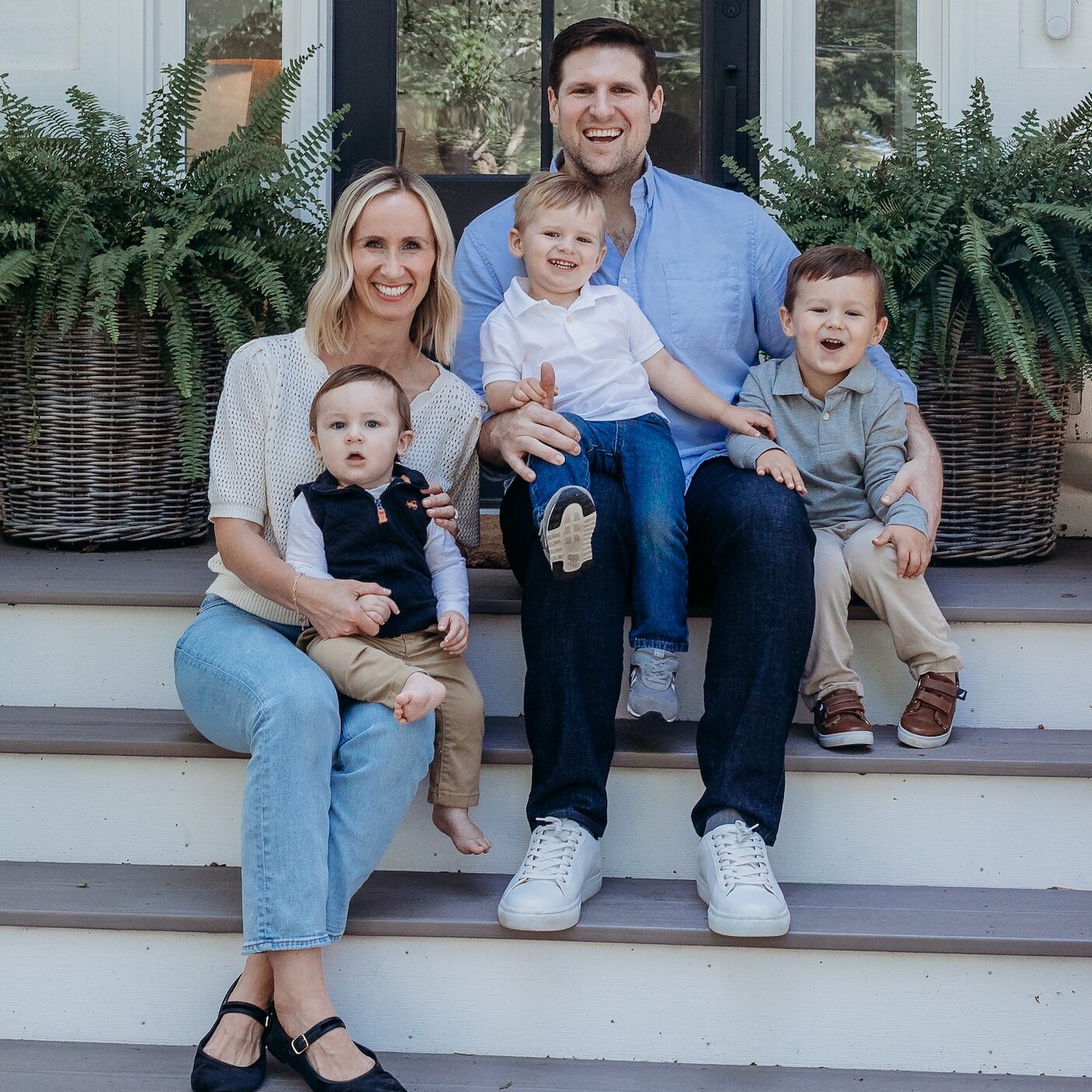
Welcome to Mom On Purpose, where it’s all about helping moms overcome challenges and live their best lives. My hope is by being here, you are more inspired to become the mom you are made to be. I’m Natalie, your host, a wife, boy mom, dog mama, Chicagoan and former lawyer turned professionally certified coach. If you’re here to grow, I can help. Let’s go.
Hello, my beautiful friends. How we doing today? How is your summer turning out? I have been utilizing my summer dailies framework that I created ahead of this summer. If you’re in the membership, you have access to that. And it has been a game changer because a lot of our summer doesn’t have a ton of structure. We did some camps and obviously have, you know, family stuff going on and that stuff has been fun, but there are a lot of our days without structure.
And so without needing to create structure in terms of like time blocking in the traditional sense, I created it using this summer dailies list where I pull from and it gives me the sense of productivity and purpose for an average Tuesday or an average day where we don’t have anything planned. And it’s so interesting just having three little boys. It’s like such, such a niche, I think, with their ages because if I had just had two or if they were much further spread apart, like my summer would be very different, meaning I would probably be at the pool. And having three little ones so close in age where it’s, it’s too many for me to have my eyes on them at once in the pool. So we are a couple years away from me feeling comfortable with going to the pool by myself with the boys, maybe even more than that.
And because of that, you know, what I had envisioned for summers, like just in my mind and based on my own childhood looks so different. And you know, I always take that as an opportunity. Like how can I like turn this into something different? And I, I love just being wrong about what I used to think, right? It’s like, oh, I guess I was wrong about that. I just imagined, you know, being a mom and being at the pool with my kids in the summer. I was wrong about that, right? Even just when I had Robert and I was pregnant with Henry, like I would always be at the splash pad or the pool and it’s so different now. And so we do a lot of things from my summer dailies lists and we get out and we do activities and we spend a lot of the middle of the days inside for when we’re home.
I call it like the reverse summer day. So the peak heat hours, like one to four. I’m often thinking of things we can do inside if we’re not doing sprinkler time because that makes more sense, right? Getting out early. My boys are really early risers. So that’s been fun. And honestly, you know, I feel the sense of brevity. Obviously we all hear it from moms with older kids and you might have older kids as well. And it’s like so common to hear, “Oh, enjoy it. It just goes so fast.” And, you know, depending on what state of mind you’re in, hearing that can, can be like heart wrenching. And also sometimes, of course, it can feel like, okay, well, spend three days with me and then see if you say that, right? And I think for me, having three boys under five years old, and it’s not like two older toddlers and a newborn.
It is a 20-month-old, a three-year-old just about in a couple weeks here, and then an almost five-year-old. They are very, very active. It’s like two toddlers and one who’s like kind of almost a bigger kid. So I don’t know. I just have this sense of brevity and I have this sense of, oh my gosh, it goes so fast. Like I, I don’t feel like we’re full on in our school activity sports era, but I also feel like we are out of the baby era, which is so interesting. And I don’t know, this is just a very long-winded way of just saying from someone who has very young kids that I personally feel like it is going so fast. And when I think of the things that we used to not do versus the things that we do now and versus the things that we’ll do in the future, like it just goes so fast.
Even the transitions from crib to beds or from like potty training, the things that I like used to care about and don’t now and oh my goodness, for me, hopefully as someone saying this with little kids to say, “Oh my gosh, it goes so fast,” that thought really helps me because I look around and there’s toys everywhere. I call myself a toys maximalist. I love it. I want the toys everywhere. It doesn’t bother me. I feel proud of myself that I’ve done the work to embrace the mess and like, you know, this is their childhood. And so for me, I think sometimes, oh my gosh, in 10 years, this stuff’s all going to be gone. Like all of it. And in 20 years, don’t even get me started. It’s going to feel so empty even if we’re in a different home. Like there’s going to be none of this.
And, and it really helps me like get the perspective back because what our brains like to do is go from like where we are now and extend that into like perpetuity, like indefinitely. We tend to think that what we’re experiencing now is going to last forever. And it’s just not true. And so when you remember that, it, it’s just a reminder that every different season has its flavor of hard. And those of you with older kids or adult kids, you know exactly what I’m talking about, right? Changes the flavor of hard. And so what I like to do is not minimize the hard for, you know, moms with young kids and also not minimize the hard of moms with older kids or adult kids. Like it’s, it’s all just brain stuff. And when you know that, then you know how you can solve for it and you can validate it.
And of course being on the other side of anything it’s, you know, hindsight, right? Hindsight’s always twenty twenty. So anyways, I am absolutely soaking up summer and acutely aware of how fast time is going and mostly enjoying it. And that is work. And that dovetails very, very nicely into today’s topic, which is sneaky ways the victim mentality shows up in motherhood because enjoying something that’s really hard, enjoying something where the feed is constantly talking about the mental load in a negative way and sometimes in an unhelpful way, enjoying something that takes a lot from you mentally, emotionally and physically, psychologically, it is not the default. And that’s really what I want to start with here is that the victim mentality is something that we all go through from time to time. And personally, I am someone who has a lot of experience with this. You know that if you’ve been around for a while or you’re in the membership, I would say self-pity used to be one of my top three negative emotions that I felt often and I don’t have any shame about that.
And I also just want to talk about it here and the whole purpose of me naming it sneaky ways that the victim mentality shows up is because I think that as high achieving women, as millennial moms, we tend to have this idea that we are so self-aware and that’s because we are very self-aware and we are very aware of other people and other people’s patterns and we stay up to date on the latest parenting trends and the hottest topics and all of that can sometimes lead to not even seeing how we’re in the victim mentality. And so I’ve done a ton of work on this and prior to doing this work, I wouldn’t have resonated with thinking I was in the victim mentality. But after learning about really what it is and getting specific examples and then kind of applying it to my own life, it was something that was really problematic for me in ways that I didn’t even know.
So if you are someone who is very self-aware, who holds yourself out as being self-aware and you aren’t sure if you fall into the victim mentality or you think maybe not, I would encourage you to listen anyway because you might be surprised. I actually think that falling into the victim mentality is the default way for most of us and it happens in ways that we typically wouldn’t even name as the victim mentality. So for example, if you say that someone else hurt your feelings, that’s the victim mentality, which we typically don’t say in that way because it’s emotional delegation. It’s you are like making yourself a victim of someone else’s emotions, okay? So I’m not talking about being an actual victim here. I’m talking about your feelings and the way that you feel and no one else can make you feel a certain way. And so without knowing that and understanding that your thoughts create your feelings or doing though work, what could happen is that you could be in the victim mentality and not even realize it.
So how I like to approach this work and really just all personal development parenting mindset thought work is with a beginner’s mind because I know that’s how I’ll get the, the biggest bang for my buck. So I encourage you to do that here even if you think, yeah, I’m probably not in the victim mentality. Have a beginner’s mindset, meaning just look for opportunities to see if and where it does apply to you in ways that you haven’t considered before. All right, let’s dive in. The first sneaky way that the victim mentality shows up in motherhood is with this though. You ready? I’m so excited. I don’t have time. Come on. This is one that is so common, right? I don’t have time. We say this as probably one of the most socially acceptable victim thoughts. I don’t have time. I want you to pause and think about this for a second.
Now I kind of take the position of my content being very practical and helpful and it is not really on like the woo side of things, but this might get a little woo for you. So stick with me for a second. If you think about yourself as someone who is always with yourself and your thoughts and your feelings and you think of time as something you’re always experiencing in this moment, there is no way to be ahead like in the future and there is no way to be behind in the past. So the future and the past always exist in your mind. So you are always in the current moment. And unlike almost every other resource, time is something that we all experience the same amount of. And that does not mean that we have equal resources in other ways. It doesn’t mean people can’t buy their time.
Of course, of course, of course, of course. But just stick with me here because this is going to actually be really empowering. If you’re someone who has the thought a lot, I don’t have time. When you slow it way down, so just slow down your thinking for a minute and focus on that thought. I don’t have time. Like the, the actual thought doesn’t even make sense because we all are always experiencing the same amount of time, 24 hours in the day. So you’re always using your time or you might even not want to say the word using, right? You’re always experiencing your time. And how you experience that is always a choice. Now assuming you are not under duress or kidnapped or something crazy, right? If you’re listening to this, I’m talking about anytime you are going to work, anytime that you are going to do something with your kids, anytime that you are whatever you are doing, it is because you have made the free choice to do that.
So let’s just take like a common example. I don’t have time for thought work, let’s say. Okay. This is very justifiable. In fact, I want to,I do want to preface this with all of your thoughts are justifiable. Okay? But they’re not all helpful. And that’s where the victim mentality really I think is problematic and where it can be really helpful for you to see that a thought can be justifiable and you can validate it, but it may be what is keeping you having the results that you have. So for example, let’s just say that you want to work on stopping yelling. And I say, okay, you need to do though work to do that. And you say, I don’t have time for that. So you will end up continuing to yell because you have decided not to spend time on thought work to work on that. And that’s not what you want, right? If you want to stop yelling, then you saying, I don’t have time to do thought work to work on my yelling or stopping yelling. Then it’s, it’s like self-sabotage almost without even realizing it.
So a much more empowering place. And that’s all we’re trying to do with the victim mentality. The victim is I am at the effect of, right? It’s helplessness versus I always have a choice. I’m always empowered. I like this mentality even if there’s evidence to the contrary. Because there’s so much that happens in all of our lives that’s not our fault. But when we take responsibility for it, and if you’re listening to this, it’s very likely that you are like me and you are hyper responsible. And this is where that hyper responsibility really pays off where it’s like, it’s not your fault, but it is your responsibility. That’s one of my favorite mantras. It’s not my fault, but it is my responsibility. Because then it puts me in the driver’s seat for creating what I want. So if you grew up in a home of yellers, it’s not your fault that you’re a yeller, but it is your responsibility to work through that and change that now.
And so instead of I don’t have time, again, which when you slow it down, it gets to the woo side of things because that doesn’t even make sense. You always are experiencing your time. You’re always with your time. It’s not like you clock out and you give your time to someone else. You always are choosing how you want to do your time. And so if you are, I don’t know, I’m just making something up. Let’s just say if you’re working instead of doing thought work, you actually want to do your work. You want to work more than you want to do though work. And you have a very good reason for that. But tell yourself the truth that you want to do the thing that you’re doing more than you want to do the thing that you’re saying, I don’t have time for that. I catch myself wanting to think the though, I don’t have time, and I just nip it in the bud.
And instead I remind myself that I always have a choice with how I spend my time. And I’m choosing X, Y, Z instead of A, B, C. I’m choosing to prioritize DEF instead of, you know, HIJ. So just simply shifting that can be extraordinarily powerful. Notice when you think the thought, I don’t have time. And just have it be like a red flag moment. Oh there’s the victim mentality. Interesting. The next example, it’s like a sneaky example that happens so common. Again, it is easier to be in the victim mentality than it is to do the work of empowering yourself. And sometimes I feel that. I’m like, oh my gosh, this work, it feels difficult. It feels challenging. It’s easier to just, you know, feel like I’m at the effect of my kids. But it, doesn’t benefit me to think that way. And that’s really number two.
My kids make me. My kids stress me out. My kids drive me crazy. My kids ruin every outing. My, you know, toddler makes me yell, whatever it is. Your kids and your environment and, you know, everything can influence you, but no one can make you. This is so helpful. Again, this is not to go from blaming your kids to blaming yourself. But when you are blaming your kids and you’re unaware of it, it makes life feel so much more frustrating because you try to control your kids. And as you know, that is very difficult. It is a losing game. So, you know, your toddler throws food. You think he shouldn’t be do- doing this. He knows better. I can’t take this anymore. And you get really frustrated and maybe you yell. And then you feel guilty and kind of like shameful for yelling, but then you’re going back and forth between blaming yourself.
I know better. I shouldn’t have done that. Versus also blaming your toddler. He also knows better. Like, you know, he shouldn’t be doing this. And so you’re in this cycle of blame. Same exact circumstance where a toddler throws food and you can have a completely different thought pattern. A though pattern like, oh, of course my toddler is throwing food. That’s what toddlers do from time to time. You can say, I can see you’re done with that. Mommy’s not going to let you throw. We’re going to clean up and then we’re going to go do something else. Same exact experience from the child, but a completely different experience from you based on your thought. And this is why I love this work because you don’t need your kids to change in order for you to have a completely different experience. My default experience of motherhood would not be what it is today, but for this work.
And, overcoming the victim mentality and getting to a place of empowerment with my thoughts a huge part of that because the victim mentality is really the thought pattern that my life is happening to me. And I think for most of us, again, high achieving millennial moms, we’re not like stuck in the victim mentality and so we’re not thinking my life is happening to me. But just based on these two examples, I guarantee you, you’ve had the thought, I don’t have time and my kids make me. Right? Sneaky. Sneaky. But again, we’re not going from blaming time to blaming you or blaming your kids to blaming you. We’re going from, okay, there’s you know, blaming your kids to there’s no one to blame. Or blaming time to there’s no one to blame. I’m choosing how I want to spend my time and this is how I want to spend it.
And does that align with my values? And if not, I always am empowered to change. Okay, the next sneaky way that the victim mentality shows up in motherhood is waiting for the next season. I’ll work on losing weigh when. When the kids go back to school. After the next vacation. When work slows down. When the holidays are over. When we’re, you know, done with the renovations, when life calms down. And the reason that this is the victim mentality is because you want something, in this case, it’s weight loss. And you are saying you can’t have it, you can’t do it because of an external circumstance. You’re basically saying like, I would go on a weight loss journey, but I can’t during this season of life. It’s not possible. And it’s sort of like making yourself at the effect of your life. Now, that doesn’t mean that this season of life is perfect for it.
I love using weight loss as, as an example because of my circumstances. I had just had my third son. You know, I was primary caregiver, meaning no childcare, working 20-ish hours per week, two dogs, a home, husband working full-time. It would have been very justified to say this is not the right time to lose weight, but I just refused. And this is what I mean. It would have been easier to just say, this is not the time. I need to wait till life slows down. I can’t lose weight right now. I don’t have time for that. Waiting for the next season, but I just refused. And guess what? It was harder in the sense that I had to make that decision and commit. But obviously, for those of you who know, my weight loss approach is all about doing more with less. But I came up with that by getting to empowerment first and asking myself, how can I lose more weight doing less?
Guess what? I never would have done that, but for getting to empowerment. And guess what? Not only did I lose 50 pounds in four months after having my third baby, but now I have gone on to help so many moms lose weight and every single one of them is just blown away with how much simpler and straightforward and more of an essentialist approach my weight loss method is. It’s the lose more with less method. And I never would have created that if I would have been in the victim mentality around my weight and what was possible then. So my friend, if you’re waiting for next season for anything, notice that it might be because you’re in the victim mentality. And if it’s for weight loss, come join me over at momonpurpose.com/goal and get inside At Your Goal Weight so that you stop waiting for next season and you prioritize what really matters to you now.
And I really think that this is part of why when I talk about how weigh loss is spiritual, that this happens. Meaning when you decide, “No, I am not going to wait till life stops lifing. I am going to take charge of my life and my goals and even though it’s kind of crazy right now, this matters to me. I want to lose weight.” And then you go and do it. And then you see that you are capable of doing that hard thing given life lifing. It blows your own mind. And then there is this success snowball. And so whatever you go to do next, there is so much more momentum from that. And I think it comes back to this, you didn’t wait for the next season. Okay, next example of a sneaky way that the victim mentality shows up in motherhood is through limiting beliefs.
And I would summarize this one with the thought, this is just who I am. It sounds like this. I’m anxious. I’m type A. I’ve always been an alpha female. I’ve always struggled with control. I’ve always had a sweet tooth. Identity, my friends, identity is so powerful. We take on so many identities from other people, from our childhoods, from our past experiences, even those that we wanted to take on at different times in our lives that are no longer serving us and definitely the ones that were given to us. You’ve heard me talk about my identity as having a sweet tooth and how I don’t prescribe to that anymore. And I had that as long as I can remember. But is that serving me? No. So if you have an identity that prevents you from creating what it is you want in your life, I’ve always been overweight.
Okay? Well, even if that’s true, if you don’t want to have that identity, then you have to let go of that. This is where the victim mentality is really disguised as identity. Again, you can be so self-aware and not even realize that your identity statement is really you being in the victim mentality. And again, it doesn’t mean there isn’t evidence for this though, this identity being true. There’s tons of evidence. You’re super smart. There’s no way your brain would be thinking that if there wasn’t a lot of evidence for it. And yet that’s not the question that we ask with though work and with identities. The question we ask is, is this helpful? Is this helping me become more of who I want to be? I’ve always been someone who yells. I’ve always struggled with patience. Maybe, but how’s that working out for you to think that about yourself?
And this really comes to the heart of doing thought work and why I’m so passionate about it because as life keeps on lifeing, you will have new circumstances to do thought work on and the different identities that you have carried will come out. And some of those you’re going to want to keep. Like I love keeping the identity that I’m really hardworking and ambitious, but I have added in wonderful identities like I can slow down and I’m very like warm-hearted. I also have worked on identities of overcoming being a yeller and being someone who can stay grounded. I definitely have been someone who identified as having a sweet tooth and I no longer do that. And so when you think a thought about your identity, I want you to just pause and ask yourself, is that the identity that you want to have? Is that helpful?
And if the answer’s no, like come on into the Mom On Purpose Membership so I can help you do some work on that. Inside the Mom On Purpose Membership this month, I am teaching a class, a masterclass on Confidence in Yourself and Your Decisions. I think this is one of the most foundational and life changing masterclasses I’ve ever taught. And that is because everything we do down to the identities that we have for ourselves comes down to our decision making capability. And so working on that is very, very important. And if it’s something that you find yourself wanting to improve on, your decision making and your self-confidence, this is definitely the best time to join because you’ll really improve on that skill and then you can also obviously get weekly coaching from me as well as all of the replays inside your private portal.
The next example is blaming your circumstances. So again, this one comes up a lot in my weight loss coaching. It’s I can’t because I have three kids or it’s going to be a lot harder for me because I’m over 40 or this is just my genetics. It’s blaming your circumstances for why you can’t have the thing that you want. And again, it’s not that your circumstances and your reasoning isn’t real and valid. That’s what I want to be clear about. It is valid. But if that is preventing you from getting the thing that you want and you can’t change it, then there is zero upside to focusing on it. For example, if you say it’s way harder for me to lose weight because of my genetics. It’s not that that’s untrue, it’s just that why are we focusing on that? By focusing on that, if you’re someone who wants to lose weight, it’s going to make it harder for you to lose weight because you’re going to be looking for reasons why you can’t.
And what does that lead to? Self-sabotage. And I define self-sabotage as slowing down, taking breaks or quitting. There is an entire lesson and training inside At Your Goal Weight on this because it can come up in sneaky ways. And so if there is something that you deeply desire, but you’re blaming your circumstances for why you can’t do that thing or have that thing or create that thing, I invite you to simply question it because it just might be that you are in the victim mentality there. The last example is the one that I touched on in the very beginning, which is blaming other people for your feelings. It sounds like he made me feel so guilty. He embarrassed me. She upset me. He hurt my feelings. They made me anxious. People do not inject feelings inside of us. You know this. What happens is we have thoughts so fast when a circumstance happens that it almost feels instantaneous.
And not only does it happen so quickly, but we are not taught growing up that our thoughts create our feelings. We’re actually taught that other people create our feelings. So combine those two things and what we’re left with is being in the victim mentality as adults where we blame other adults for creating our feelings when really they’re not that powerful. And I don’t say that to take the blame from them to put it on you. Instead, I say that because it is life changing. It is so helpful because then what you can do is you can allow yourself to feel sad, to feel frustrated, to feel upset, to feel annoyed, but you can take full responsibility for it. There is nothing that feels worse and please know I am not speaking from my ivory tower here. I have been guilty of this far too many times that there is nothing worse than blaming someone else for how badly you feel.
Nothing worse. Why? Because it leaves you so powerless. Because if that other person is responsible for how you feel, then that other person has to change in order for you to feel better. The very last person that you would want to put in charge of your feelings now is in charge of your feelings. Or even if you would want them to be in charge of it, they’re clearly doing a pretty bad job, which most people do, right? Because we’re not taught this and we, you know, are barely learning how to do it for ourselves. And so when you can see this and when you can see yourself in emotional blame, again, it is life changing because then you can say, “Oh, I see what’s happening here.” I am feeling a negative emotion. I’m feeling frustrated. I’m feeling anxious. I’m feeling resentment. I’m feeling fill in the blank with a negative emotion.
It’s coming from the story I’m telling myself. It is coming from my thoughts. They’re not to blame, she’s not to blame, he’s not to blame, and I’m not to blame. This is what it’s like to be a human being having a human experience. Now, of course, I am giving you like a brief overview of actual coaching and self-coaching and getting coached with which is I think the best way to get out of the victim mentality. Otherwise, you’re looking for a hero to save you. You are looking for the villain to blame. And it creates that dichotomy of, you know, the drama triangle. I’ve talked about that before on the podcast and I have seen it time and time again in the thousands of moms I’ve coached as well as in my own life so deeply that getting out of the victim mentality changes your life over and over and over again.
I have made the most progress when I have just decided this is my responsibility. This is something that I can change. This is not how I want to feel. I want to think and feel differently about this. Or this is how I want to feel and that’s okay and no one’s to blame. When you are looking for someone to blame, looking for something to blame, whether it’s time, whether it’s your kids, whether it’s, you know, someone who you’re giving responsibility for your feelings to, whether it’s your circumstances or this season of life, again, the problem isn’t that like you’re wrong or bad for doing that, of course not. It’s that it disempowers you. It keeps you from getting what you want. And so if you want to stop yelling and you’re always blaming your kids, then you have to try to control your kids, which obviously doesn’t work for you to stop yelling versus just doing the thought work out of the moment and joining the Mom On Purpose Membership and getting weekly mom group coaching to keep your brain sharp, that is something so within your control.
It’s the same thing with weight loss. It’s like if you’re blaming this season of life for not doing it or you’re blaming not having enough time, I mean, just use my example to illustrate this. If I would have waited, I would probably still be waiting to start. I’d probably be waiting until my youngest was in school. Like that would have been such a shame. Like for what? It was just unnecessary. I was able to do that. And the compound success from that is just incredible for myself, for my kids to see me go out and achieve that goal. And then now for all of you and the students inside At Your Goal Weight and the private clients who I’ve been coaching on weight loss, there’s this ripple effect that you can’t even foresee. Again, I’ve talked about it before. I don’t have great before and after photos of my weight loss journey because I didn’t even know that this was going to be something that I was going to share nor did I know how well it would resonate and how many moms would want my tools.
And so it just goes to show that when you step into empowerment and you say, “This is something that I want and so I’m going to choose to do it now even though it makes no sense,” you can’t even foresee the ripple effect of that. And I think that is true with respect to everything with the victim mentality. I talked about it before on the podcast where I could have easily been in the victim mentality with my student loans and how getting out of that created this entire business. Getting into empowerment from my student loan debt resulted in me creating a business that I run and love and serve my clients through and just have made a lot of money and been able to contribute to my family’s finances. Like the way that it has impacted my life from that decision to step into empowerment has been life changing.
And in the small ways too. I’ve talked about it before on the podcast with blaming my son’s night wakings on why I can’t sleep. And when I stepped into empowerment, it just made every day so much better. And I realized, you know, he’s not doing this to me. He’s just being the baby that he’s supposed to be. I’m deciding to get up with him. That perspective shift is so subtle and it completely changed my experience of motherhood in the very best way. It would be so easy for me to go into the victim mentality with my kids and my life right now in terms of being with them so much and I just stay out of it and I remind myself I always have a choice. This is really interesting. I was just on a podcast and I think I mentioned this here before. I mentioned it somewhere.
I can’t remember where. And the host asked me, “What’s your favorite thought?” And it came to me and I said, “I always have a choice.” And I’ve never articulated it in that way and that really is the opposite of victim mentality. The victim mentality is I don’t have a choice. And when you think that, you feel trapped by time, trapped by your kids, trapped by your spouse, trapped by your circumstances, trapped by this season of life, trapped by old identities, trapped by your upbringing, trapped by your family of origin. And it’s not that there isn’t validity in the rationale, it’s just that, that rationale is keeping you from the very thing that you want. And so it’s to your benefit to change that thinking and it will change your life. So come on over and join us inside the Mom On Purpose membership over at momonpurpose.com/coaching. I would love to help you with these tools, my friend, and see you inside. Take care.
Enjoy the Show?
- Don’t miss an episode, follow the podcast on Apple Podcasts or Spotify.
- If you haven’t already, leave a review in Apple Podcasts.