Transitioning back to school is hard—not because you’re doing something wrong, but because of the human brain. Whether it’s a new classroom, new school, or new routine, the whole transition experience can feel tough for kids and parents (and I’m no exception). In this episode I’m sharing my top five mindsets for transitioning back to school. Use these mindset shifts for any transition to help you feel more empowered and confident (and less stressed and worried).
Listen to the Full Episode:
Show Resources
- If you loved what you heard on the podcast, check out the Mom On Purpose Membership.
- Want to lose weight? Join my weight loss program here: At Your Goal Weight
- Come find me on Instagram so we can connect.
- Sign up for the Mom On Purpose Weekly Newsletter to get a tool, tip, or resource sent to your inbox every Thursday.
Full Episode Transcript:
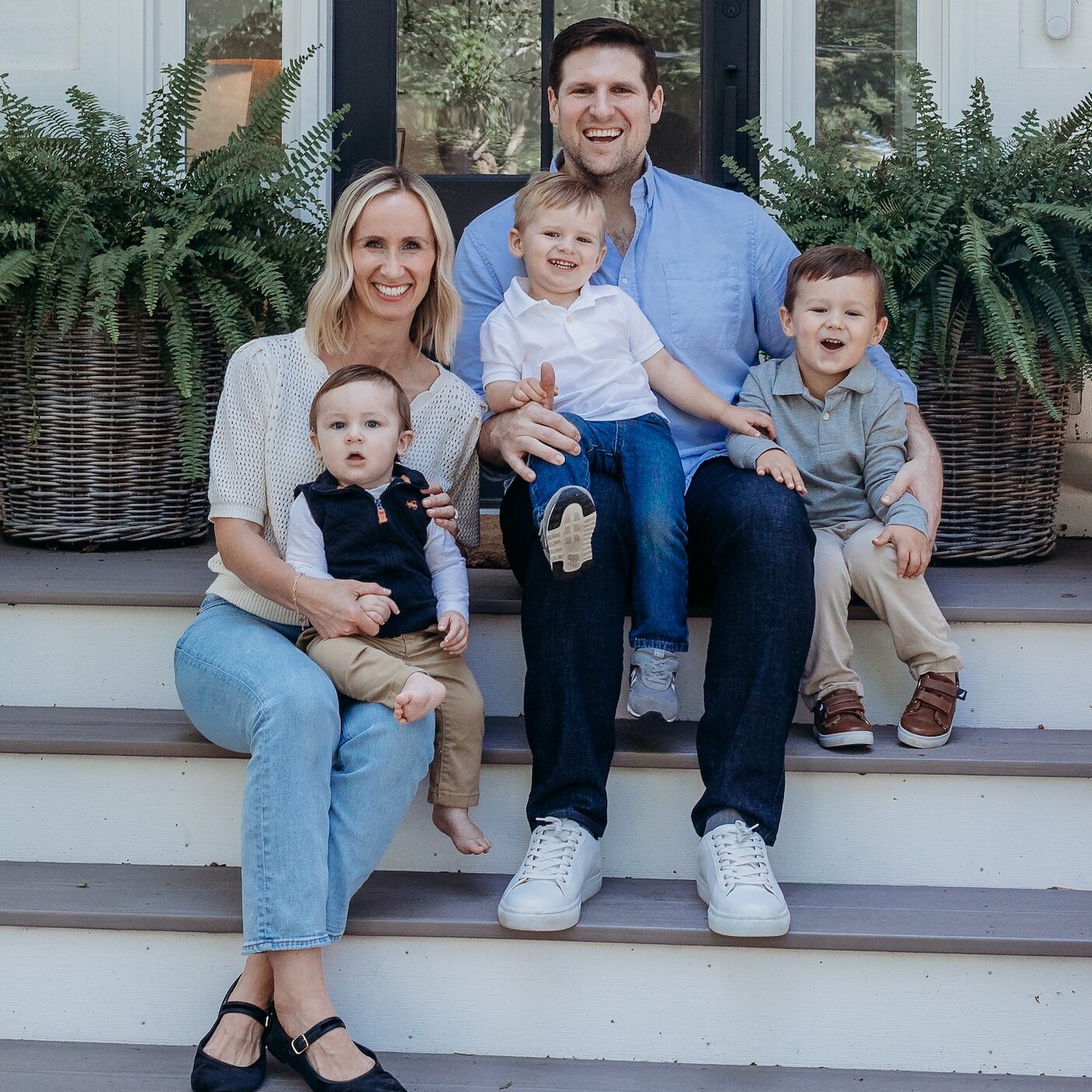
Welcome to Mom On Purpose, where it’s all about helping moms overcome challenges and live their best lives. My hope is by being here, you are more inspired to become the mom you are made to be. I’m Natalie, your host, a wife, boy mom, dog mama, Chicagoan, and former lawyer turned professionally certified coach. If you’re here to grow, I can help. Let’s go.
Hello, my beautiful friends. How we doing today? I am so happy to be sitting with you here in my safe and happy place of podcast recording. I have been trying to get better at short form content, and after having a podcast for nearly a decade, I feel so comfortable doing long form content, which if you’re not familiar, long form just means literally longer types of content. So think podcasts or YouTube. Those are the two kind of typical long form. Short form is all of the content we see on social media, like reels, you know, TikTok, Instagram, that sort of thing. And they are completely different. And I am so comfortable with long form. And so whenever I get on to record, I just, I feel like we are having a coffee conversation.
We’re sitting down, having a chat. I feel like I’m very connected to you. I hope you feel the exact same. It is so foreign to me and different to have that same experience in short form. Anyways, long-winded way of saying that I love being here with you. I’m so happy to be here with you. If you want to follow along on Instagram, it’s mom.onpurpose, you absolutely can I’ve been sharing some just specific motherhood examples of how I’m applying these tools as well as some weight loss content over there. But otherwise, this is the spot I love being. So glad you’re here. I also revamped, I don’t know, maybe a month ago or so, my weekly email that I’m sending out on Thursdays.
It’s always been Thursdays. I took some time off from it and I decided I want to bring it back, how it’s going to run. It’s just called A Note from Natalie. I send it out every Thursday. You can get it over at momonpurpose.com/subscribe. I’m sharing kind of a life lately section in the beginning, just with some personal updates of motherhood and what’s going on with me and all of that, as well as a note, something that’s on my mind with respect to the mental and emotional tools, as well as the physical for weight loss. So motherhood, life, all of it, momonpurpose.com/subscribe to get that sent to you every single week. All right. How’s it going? Thinking of you, August. We’re in it. This is transition season. So I love, love, love this time of year. Just the, you know, firstborn daughter who loves school in me that can’t help even as a 40-year-old mom of three.
I still love this time of year, even though it is very different and has different types of challenges. And what helps 1000% is doing this work. Doing the work of expecting transitions to be hard. And so I want you to just start off with knowing why transitions are hard and what you can do to kind of help yourself through it. Regardless of whether that is a school transition, like is most common this time of year, but it could be a different type of transition. I was just coaching someone on the call this week about moving. Moving is a transition. Any sort of transition will feel hard regardless of if it’s school or a job or a house or any other type of life transition. It could be a relationship change. You name it, transitions are very hard. Why? That’s really important. So let’s start there.
Transitions are hard because of the human brain, the survival part of the brain. It is wired to conserve energy. So if your brain can just keep doing what it’s always done, that feels very safe because what you’ve always done in the past has kept you alive. And also, it feels very easy. There’s nothing to figure out. And so even though it would be very boring, your brain would prefer you to just do the same things all day and every day. And what is a transition? It’s the opposite of that. It is unfamiliar. It is changing the routine. It is not as predictable. Even if, you know, you’re in the same house, you’re in the same school, it’s just a new school year. It doesn’t matter. Stopping one type of routine, i.e. The summer, and heading into a new type of routine, i.e. The school year, will feel challenging.
And I almost like to expect it to be more challenging than it is likely to be, just because I think that helps me with my mindset. I think we get ourselves into trouble with what we typically do, which is hope for the opposite. We’re sort of like, for anything, it’s like crossing your fingers and, and thinking, “Oh, I just, I just hope that this transition goes well.” We’re sort of like holding our breath and tense and clenched and there’s that little anticipatory anxiety versus really staying grounded, expecting there to be challenges, knowing that transitions are, you know, difficult oftentimes. And just saying, “I’m here for it. This is the life experience. This is, you know, what a blessing, what a privilege that we get to do this.” And I don’t even mean economically privileged. I mean, like, a privilege to be alive experiencing this. And that can be, like, a great perspective.
But before we dive into what the specific mindsets are, I just want to start off with the foundational understanding of why transitions are hard. When you really understand the primitive brain, the survival part of the brain, it just wants you to keep doing what you’ve always done. That makes it feel safe. And if you are safe, your brain is doing its job to keep you alive. It’s predictable, you know what’s going to happen. A transition is the opposite. Not only does it feel unsafe because there’s this element of the unknown, but it also requires more energy to figure out what is going to be different. So now we have two components that the primitive brain does not like. It is new and different, and it is uncertain. And your brain just isn’t going to have that, right? And, what I mean by that is it’s not going to create the same emotions of safety and ease that it would re – create if you were continuing in the same path of doing the same routine.
And so a transition, just by the nature of that word, means that it’s new, means that it’s different, means that your brain is going to try to overcompensate for that, to figure it out. And that can present in worry. It can present in overwhelm. It can present in anxiety. It can present in a number of ways. But just being onto your brain and understanding why this is happening is incredibly powerful. I want to even just pause right here and emphasize this. So think of the example, and I’ve talked about this a long time ago, probably years ago, but I love this example or analogy, if you want to call it that, of a snowstorm. If you don’t know what a snowstorm is and a snowstorm hits, it is going to be like a level 20 out of 10 challenging. But if you know that a snowstorm is coming and you know that snow is very cold and that when you go outside, you need to be wearing a hat and a coat and gloves, and that if you have an ice scraper, that’s going to help and you need a snowblower, and shovel.
And you’re probably going to stay inside and maybe you want to go to the grocery store ahead of time. If you know all of these things ahead of time to prepare for the snowstorm, the same exact snowstorm will hit, but you will have a completely different experience of it. Why? Because you were so much more prepared. The snowstorm is exactly the same in both scenarios. I like to think of transitions like that. If you know that a transition is about to happen and that that transition is going to be challenging, it still will be challenging, but there won’t be this added layer of surprise of resistance, that resistance of this shouldn’t be happening. Like if you don’t know what a snowstorm is or that it’s coming and it hits, immediately you’re going to be thinking this shouldn’t be happening. Conversely, if you know that it’s coming and you know what a snowstorm is, then you can say, “Oh, of course this is happening right now.
Still not my favorite thing. Still not like we’re at the beach. However, I’m prepared for this.” That is the difference in your experience when you have these tools for a transition like heading back into school. It is a completely different experience. One can feel very scary. It can feel very worrisome and anxiety producing. And the other, even though it’s not your favorite thing, it just feels like mildly unpleasant, but you know you’re going to work through it. Are you with me? I love that example because to me, it’s just so visual and I can really feel the difference there. Okay. Now let’s dive into the mindsets that I personally love and use that are very helpful for transitions, specifically for back to school. Mindset number one is expect resistance in the transition. I love this. I repeat this thought. I sometimes experience a transition that I wasn’t even expecting.
And then I reflect back and look and think, “Oh yeah, that was a transition. I should have expected resistance in the transition.” But ahead of time, it works even better. Because you can say, “Okay, school is coming up this week or in the next couple of weeks, and that’s a transition for everyone. I’m going to expect there to be resistance. I’m going to expect a little bit of a snowstorm.” Instead of the thought that we normally go to, which is, “Oh, I hope, I hope things go smoothly. I hope my kids really like their teacher. I hope, you know, everyone transitions well.” This is a side note, but I was at my son’s swim recently and I overheard a mom say to her young child, like three years old, who was like gripping onto her leg and didn’t want to separate for swim class.
And she said, “Remember, if you do well, you’re going to get another gold star.” And I just tensed up and I was like, “Ugh, no.” Right? We have conflated the skills of separation with the thing. So separating is about attachment. And it is okay if your child struggles to separate. That is not a sign that the skill that they’re working on, let’s say, you know, swim in this case, is something they’re struggling with. It’s, it’s separation that feels challenging. So instead, it’s, “I know you don’t want to leave mommy. I know it’s really hard. I love you. I’m going to be right around the corner and I know you can do this. And it’s okay to feel sad”. Hard and fast, goodbye, separate, boom, done. That is much better in terms of the attachment being secure and not trying to reward, like, repressing, suppressing emotions, which is kind of what we do when we say, you know, separate well, don’t cry.
Like, put a smile on your face even though you’re feeling scared and don’t want to leave your mom. This doesn’t mean you don’t leave your mom. It doesn’t mean we don’t separate. But allowing emotions is so important. I could see this little boy, like, trying to stuff down his sadness in real time. And there’s, a difference between, you know, trying to, like, clear your emotions versus trying to hide them. And so how this relates to transitioning to school is that all of us, even into adulthood, so I vaguely remember my brother going into college and struggling. He always struggled with transitions. Kind of reminds me of my middle son, Henry, with transitions he struggled with transitions a lot, even going into college. Like the first couple of weeks of anything was just always so challenging for him. And he is, like, a very well-known and accomplished surgeon right now.
And I think back to him transitioning and struggling even just in college. And that was just about attachment. And so I’m bringing this up here because regardless of the age of your kids, it is okay if they struggle with separation. And if they struggle with, you know, separation anxiety or attachment in any way, nothing has gone wrong. There are various different attachment styles. I love and geek out on attachment. I’m not an expert in it, although I love to study it and obviously have examples and experience from my own life as well as, like, my kids’ lives and just seeing the different attachment styles and how easy it is for some of my kids to separate and how challenging it is for Henry to separate is just helpful for me to kind of, experience. And I continue to learn about it. But my point here, long-winded way, of bringing it back to transitions for school, is that it’s very likely that some of you will have that experience where your kid doesn’t want to separate.
And it is my belief and opinion that, kind of encouraging them to suppress that and rewarding them if they. You know, we call it something so nice, like transition well, right? But what we mean is if you don’t cry, if you’re not scared, if, you put a smile on your face, like you get a gold star, like what does that teach kids? It teaches them that, you know, if they pretend to be happy, we’re going to reward them. And not only are we going to reward them, but it feels like we’re going to love them more. And that is not what this mom intended at all. This is obviously just done because, you know, that’s how we were raised. And you don’t know better until you know better. And what I want to just teach here and be a proponent of here is yes, you can encourage your kids to have a positive attitude, but you also can make space for them to feel however they want to feel.
So for me, one of the sentences I love is you don’t have to want to go to school, but you have to go to school. You don’t have to want to go, but you have to go. It’s okay that you don’t want to go to school. I get it. Sometimes I don’t want to go to work or whatever it is, right? It’s like normalizing their experience, but also saying, and we’re still doing it. Feeling a certain way doesn’t mean that you get that outcome. And
I think, again, we always conflate feelings with actions. I’m way off topic here, but it is relevant because it’s back to school and I’m so passionate about attachment, even though, again, you know, I’m not an attachment expert, but I’ve done so much work on it and I just, it breaks my mama bear heart, especially for these little boys who are just highly sensitive.
Obviously coming from my own experience with, with my son, Henry, who’s more highly sensitive and seeing how much us waiting for certain things, uh, has been helpful for him. So all that is to say, when you allow space for your kids to feel however they want to feel about a transition, you are staying connected to them. You will have a much better experience. And so instead of hoping that they do well, hoping that they smile, hoping that they’re happy, hoping that they like their teacher, it’s, I hope my kids have the exact experience they’re supposed to have this year. Maybe it’s supposed to be challenging for them. Maybe they’re not supposed to get their favorite teacher. Maybe they’re going to learn different lessons than I would’ve picked for them. I’m not sure yet, right? We’re not sure. We don’t know. But I’m here for all of it.
I’m going to embrace all of it. They have me as their mom. You know, if you’re married to your spouse, it’s like we are a team. They have their dad as well. We’re going to figure out all of the challenges that they have together as a team. It’s okay. And this is a much more grounded experience versus an experience rooted in fear and kind of that hope that hangs on an outcome that is unhelpful. Like, okay, I hope they do really well and they get good grades and that they’re happy and their teacher likes them. It’s like, well, that’s great if that’s the experience they have, but what about when it’s not? And some years it’s not going to be that experience. And now what? Okay. Let’s dive into number two. Nothing has gone wrong. Love this thought. If the first day is rough, if the first week is rough, if, you know, the first month is challenging.
All right. Didn’t see this coming. Didn’t predict this for the first part of the transition, but nothing has gone wrong. This doesn’t mean anything about their future. This is the challenge we’re navigating right now. Now, nothing is, has gone wrong trips some people up because if something is happening that, you know, includes your child going through a tough challenge that you wouldn’t want for them, then it can feel like you don’t believe the thought nothing has gone wrong. But that presupposes that you know what your kid’s challenges should be. And what I like to remind myself that’s really helpful. It’s sort of like an add-on though to this is, oh, I was just wrong about my kid’s experience. I though my kid was going to struggle with A, not B, but clearly they are struggling with B. So that’s where we’re at. Nothing has gone wrong.
Nothing has gone wrong does not mean that you just sort of, are complacent. I think people conflate and confuse acceptance with complacency. So if your child is having a challenge with reading or with friends, you know, typically it’s one of the two. It’s like either friend challenges socially or it’s academics. So pick one, whatever is the challenge of the semester. It doesn’t mean that you don’t get them support and that you’re not taking action to help them, whether it’s a skill gap or whatever other support that they need. Absolutely you can do that, but you can do that from acceptance. When you do it from rejecting reality, you’re thinking something has gone wrong. I gotta fix this. This shouldn’t be happening. When you think those thoughts, you will feel heavy, tense, worried. You will go into like controlling fix it mode. It will make the experience worse for you and it will make the experience worse for your kid.
Instead, not complacency, not like, okay, well, this is just the challenge. It’s, oh, this is the challenge that we have. Okay. All right. Bring it on. Let’s go. Let’s do this challenge. It’s acceptance. From acceptance, you can take action to whatever you want to do. Get the tutor, work on social skills, or just be in the discomfort of the challenge. Maybe someone was excluded. Your kid wasn’t included in something. We don’t have to call the teachers and the moms and meddle and figure it out. We can teach our kid, okay, this is hard, right? This is a part of life. Let’s talk about it. How did you feel? What made you feel that way? What were you thinking that made you feel that way? What was so hard about this? Sometimes in life, it, you know, stinks to feel excluded. And how do you want to handle this?
Like believing in your kid to lead the way. I’m always relying on my Connected Parenting framework, and that’s part four of it. Because when you believe in your kid to be the hero of their life, it doesn’t mean that you don’t support them. But you’re more like a good coach who isn’t worrying, isn’t meddling, isn’t like on the field playing the game for them, but you’re on the sideline with them, coaching them, helping them, supporting them, being with them in their feelings. Nothing has gone wrong. Love this mindset. Number three kind of dovetails nicely with number two, which is we are figuring this out. Instead of, we should know this already. This transition should be easy. Why is this so hard? This shouldn’t be happening. If something feels uncertain, unclear, difficult, or you’re anticipating that it will get even more challenging or difficult. Instead of worrying about that, thinking you should know it, you can just try on.
We’re figuring this out. And it creates this sense of capacity and agency and possibility and positivity and strength. You can figure it out. You will figure it out. When? I’m not sure when. But, you know, maybe that’s not the point. It will completely change your entire experience of navigating a challenge when you have the thought, we’re figuring this out. And I love the we in this one because I think just as a mom and in families, we tend to think of like us, at least if you’re like me, as like the fixer, the one who’s got to solve the problem. Or, you know, conversely, sometimes we go to our kids and thinking they have to solve the problem. And there’s something so powerful about we. Like we’re doing this together. I like to think we’re on the same team. Just love, love, love that thought.
Number four, this is temporary. This is not forever. Even if you can’t see an end in sight, I mean, typically with transitions, you can see an end in sight, whether the move is done or, you know, after the first month of school. Like oftentimes with the transition, we know when the transition is over. But, you know, sometimes our primitive brain oftentimes likes to go to what if this is forever? What if this doesn’t change? I like to just remind my brain that this might last longer than I want it to, longer than I ever thought it would, but it will end. This will not be forever. I will not be 85 navigating this. I just won’t. And I could be navigating something that looks a little bit different. Like if your kid is having a challenge, they could still have a version of that challenge in 50 years, but it’s going to be so different, right? And I’m offering this thought to you, this is temporary, deliberately because your brain and my brain, all of our healthy human brains, we like to take the challenge of today and project it like indefinitely into the future. And so when you can just remember, okay, what we’re navigating is a very specific challenge right now and it’s not going to be forever. This is temporary.
And I get it. Your brain, my brain, our brains do not like open loops. So we want to know. Natalie, tell me when is this going to end? I wish I could tell you my friend. I don’t know. But again, if you take the worldview and the life view that our challenges are meant for us, and that doesn’t mean that we want them, it doesn’t mean that we would wish them on anybody, but when you have a challenge, when you take the view that is this challenge that you are supposed to be navigating in your life right now, that is very, very powerful.
Because then again, when you’re navigating something, you can be thinking about, okay, how long is this going to take? I don’t know. But there’s an opportunity here for me to something, right? For me to strengthen my what? My capacity for overwhelm, my capacity to feel worried, me to strengthen. What, is the skill that you need to strengthen to get through this? My capacity to enjoy myself and my life and motherhood while what? My husband is stressed out about his job while my kid is struggling in school, right? And so many of us think, like, that would be horrible. I want to feel, you know, only as happy as my unhappiest child. And I want to say, do you?
Do you want to do that? Because I think the answer is actually no. We want more control over our emotions. And the more we do this work, the more control we are over, the more control we have over our emotions because when we hang our emotions on other people, on our circumstances, on how happy or unhappy our kids are, we are on a roller coaster.
So a huge part of this work and navigating any challenge is to be able to think and feel how you want to feel in that challenge regardless of what is happening externally. And finally, number five, I can do hard things. Now, if you’re like me, you might have winced a little bit or even a mild cringe. But here’s the thing. I know that this statement is overdone. I know that it is now a cliche. However, I still have it on a magnet and I still believe in it deeply. And I still personally need it because my default, and if I’m being honest, I think it’s most of our defaults, at least for the women who I coach in this community. It’s a big one that we have to overcome that we often don’t even, you know, bring to the surface, which is the self-pity.
It’s, it’s kind of like, well, I am, but I shouldn’t have to. Like, it’s not fair that I have to be going through this. And the truth is, it’s not fair. It’s definitely not fair. But that’s not even the problem though. The problem thought is, and it should be fair. And that creates so much resistance to what is, because that is not your reality. And so for me, when I focus on, I can do hard things. And not just I can do hard things, but I like being a person who does hard things. I also like for things to be easy. Again, another lesson from swim lessons the other day when we were leaving, I was talking with my son about one of the skills he’s learning and I was telling him, like, it’s awesome to not be able to do something yet and work on that skill and learn how to do hard things.
And he just kind of was being grumpy and said, “Oh, I just like doing easy things.” I just loved it, right? Talking to young kids is so awesome. And they just say exactly what they are thinking. And I said, you know, you’re right. I like doing things that are easy too. And easy things are awesome. And it’s so great when things that we want to do are easy to do, and some things are going to be easy. And I’m saying this because the truth is, I think we can take, I can do hard things too far, so far that we just expect everything to be hard. And so I do love the duality of like the yin and the yang of doing hard things and also doing easy things and let it be light and let it be easy and let it be fun.
And also, when circumstances happen and our brain just goes into overdrive or our brain perceives it as too much or difficult or challenging, you got to also be able to kick it into high gear and be someone who not only can do hard things, but who believes in herself to be someone who is not just capable of doing the hard thing, but like thrives in doing that hard thing, who is made for doing the hard thing. I love to think I’m so much stronger than I think. I got this. Like oftentimes the end of the day, it’s like, whew, left it all on the field today. Did, a great job for some of the things and missed in some other ways. And when you can do that without the mom guilt, motherhood gets so much better because then it’s just skill development instead of hanging your goodness hat on every little mistake that you make, which is not fun at all.
So last one, I can do hard things or some version of that if that lands too flat for you. It’s like, not only am I capable, but I’m so much stronger than I think. I got this. Until next week, take care.
Enjoy the Show?
- Don’t miss an episode, follow the podcast on Apple Podcasts or Spotify.
- If you haven’t already, leave a review in Apple Podcasts.