Get the brand new tantrums mini course here: How I Stay Calm During Tantrums With 3 Kids Under 5 Years Old
Listen to the Full Episode:
Show Resources
- If you loved what you heard on the podcast, check out my Mom On Purpose Membership.
- Grab my free Podcast Directory for the best episodes to listen to, listed by category.
- Come find me on Instagram so we can connect.
- Sign up for the Mom On Purpose Weekly Newsletter to get a tool, tip, or resource sent to your inbox every Thursday.
- Call the Podcast Hotline here: 8-333-ASKNAT (833-327-5628)
Full Episode Transcript:
Welcome to Mom On Purpose, where it’s all about helping moms overcome challenges and live their best lives. My hope is by being here, you are more inspired to become the mom you are made to be. I’m Natalie, your host, a wife, boy. mom, dog mama, Chicagoan, and former lawyer turned professionally certified coach. If you’re here to grow, I can help. Let’s go.
Hello, my beautiful friends. How we doing today? I miss you all. The podcast as a reminder, is now monthly for the public free version. If you would like the weekly version, it is inside the Mom On Purpose Membership over at momonpurpose.com/coaching. You also get tons of other content, weekly group coaching and the tools and frameworks that I teach in the monthly master classes. So just a reminder, we still get emails about that. So just letting you know. And today I just want to chat about tantrums and what that has been like for me.
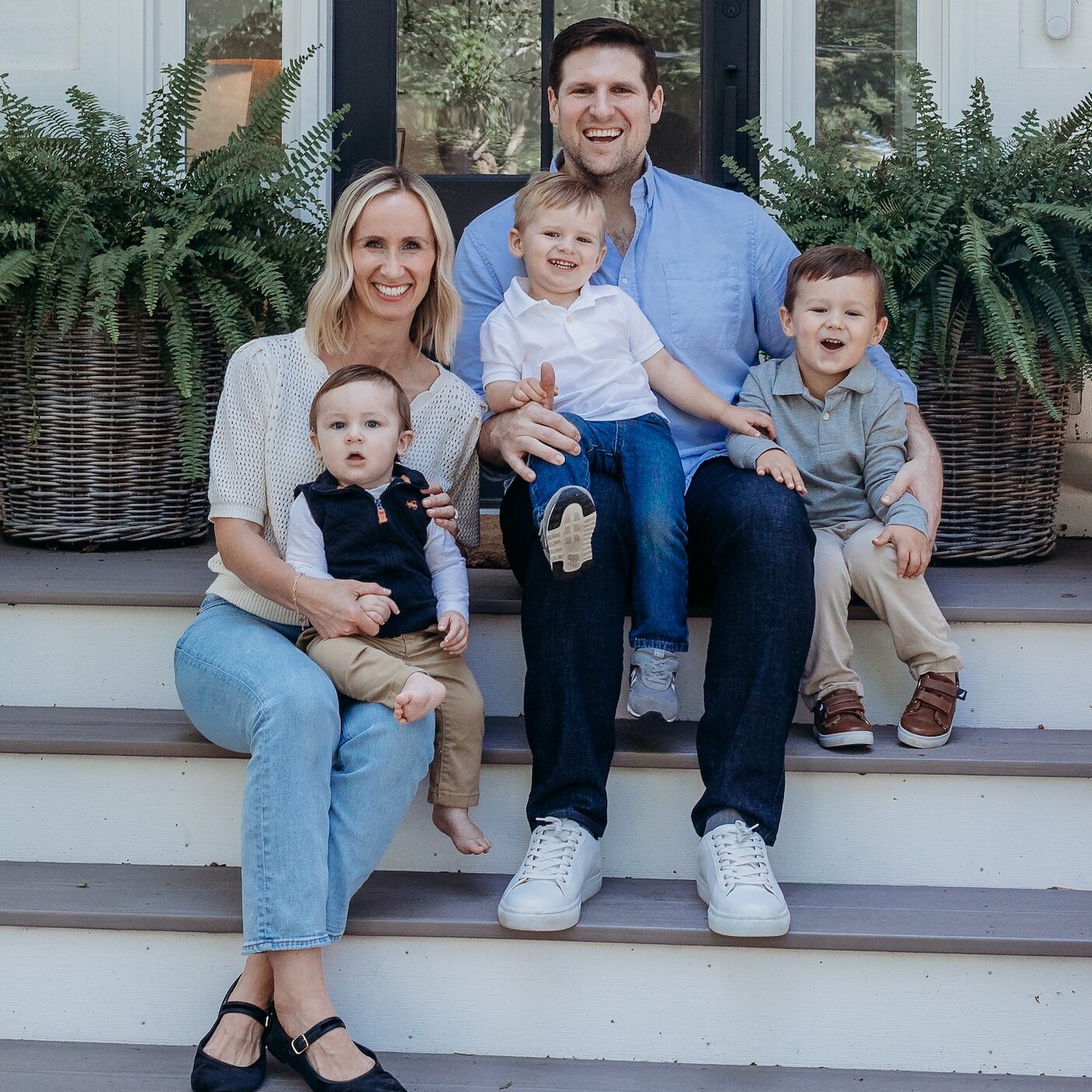
I’ve been talking to my girlies in the membership about how it feels like I don’t just have two kids and a baby. I have like three toddlers and I did not know that would be a shift, it is a big shift, my friends, and it has really kinda, shed light on on the difference of having two kids and a baby where I would go out everywhere all the time to having what is essentially three toddlers. Now my oldest is kind of out of toddler phase, I guess he’s four now, but I essentially have a one and a half year old, a two and a half year old, and a 4-year-old. So my kids are, my oldest two are 20 months apart, which I love that age gap, like a two year age gap almost, it feels like. And then my middle and youngest are 15 months apart.
Not saying I have any regrets, I don’t, but I also would not necessarily recommend that it to me, and this is just my experience, it feels like a one year age gap and of course you get what you’re supposed to have. I wouldn’t change it for the world. But also it can be challenging and hard. And what I never want to, uh, send the message of on this podcast is that like it’s just so easy and, you know, I don’t have challenges and my kids are just so well behaved. That’s not at all the message. The message is also though not this is horrible and hard and I need to escape my life and my family because I’m so overwhelmed. But in the middle is, yep, this is hard. There are meltdowns and tantrums and it’s challenging. And also I really enjoy it and I have tools that help me.
And, at the end of the day, my tired. Yes, but is my mind racing and spinning with negativity or worry? No, it’s not. And so, if I can be an example of that and help anyone else, I want to be, because I know, I know my crazy brain, my friends, if I did not have these tools, I would be drowning. There’s just no way. I don’t even know if I would’ve had three that close together. And if I would have, it would have been so much harder than it is. So, you know, let me let me be a light if available at all to you. And, just know that I’m right there with you in the chaos. But it’s like beautiful chaos. It’s the best way I can describe it. It’s like I am here for all of it. I wouldn’t trade it for the world.
I, often say it’s like, it’s the cost, right? And so if you think about like going to Hawaii, it costs money. It, costs like the, the travel part of it. No one’s talking about going through TSA and your luggage and all the things, right? It’s part of the cost. But then you get Hawaii, right? It’s kind of like having a family. It’s like part of the cost is, you know, dealing with tantrums even daily and kids not listening and all the things, but you get their beautiful family. And I know you, if you’re listening to this, you would never trade that. So it’s not a gratitude issue, but it might be an issue in terms of the tools that you have and are equipped with and whether or not your skillset matches the life that you’ve created. So like I was just saying, if I didn’t have these tools and I didn’t have the skills for parenting and navigating tantrums, no way would I be able to enjoy motherhood in the way that I do.
So that’s what’s happening over here. I’m trying to think of any personal updates since, I am only on here monthly. Now. Just a reminder over at Mom.onpurpose on Instagram, I do try to share more kind of,, personal behind the scenes updates. So if you are on Instagram, you want to connect over there, I’m over there. But I don’t think there’s that much going on other than it is feeling a little bit like spring and that feeling in the Midwest. There’s just nothing better than that. I’m so grateful for it. And, just getting outside, it’s just like a life changing for my little ones and for me. And so we’re just doing that. A lot of outdoor play right now. A lot of swing sets, a lot of imaginative play. My kids just pretending like every swing set is a ship.
That’s the phase that they’re in. So, my little one Henry will say, captain Mommy and get on the ship and it’s just fun. So that’s what’s happening over here. And with that, of course there are tantrums and that’s what I want to talk with you about today. Having three boys right now under five years old, like any set of children, siblings, boys and girls, of course, you know, there are tantrums, there is yelling, there is hitting, there is throwing. There is definitely someone crying almost every day. And you know, I just want to normalize that it is typical, it is common and you can either make it better or worse for yourself and your kids based on your skillset. I don’t lose it. And that is not because I’m special. It is not because I was born this way. It is definitely not because my kids are calm and they just love being so kind and sharing and are so well mannered.
Of course not like they have little, you know, one and a half, two and a half and 4-year-old brains . So, my kids are amazing and good and there’s dysregulation, there’s yelling, there’s throwing, there’s hitting. You know, right now, knock on wood, no one happens to be in a biting phase, but we’ve done biting before. We’ve done the dysregulation for like what appears to be, from my perspective, no logical reason at all, right? It’s like the wrong color cup. It’s you know, one of my kids loves to sleep with like, I call it his treasures, like whatever things that he was playing with before bed. And if one thing is missing, it’s, you know, world War three. And, I’ve really been able to manage and navigate these like highly intense moments in a way where I feel confident and supportive and loving.
And, I think that it’s kind of like a, a little bit of a misunderstanding when it comes to kids. And when it comes to our role as parents, probably because of how we were raised, it doesn’t really matter why, right? But the common advice and the mistake that I see so many moms make is first of all, just focusing on in the moment, taking deep breaths and then also trying to control your kids. Now, we don’t call it that. We say like, trying to get my kids to listen, trying to get my kids to stop, fill in the blank, to stop throwing, to stop fighting, to stop XYZing, okay? And please know, I’m all for teaching our kids modeling, you know, kind, loving behavior. And it matters a lot like the angle at which you do that. So if you are trying to help your kids share or, play well together, let’s say you have siblings, a few kids that can be done from a really like loving place where you’re like embodied in your leadership as a mom.
Or it can be done from the angle of I can’t go through what I did yesterday. This fighting has to stop. I have to get away from this. I have to figure out a way to get them to get along. Very, very different angle of application. And that goes to your mindset. So if you are trying to get your kids to stop doing something, right, I call it like get my child mode. If you’re trying to get your kids to stop hitting, to stop throwing to stop being mean to their sibling, it’s not that the intention is like wrong or bad, of course we want our kids to play nicely together. It’s just that from that lens, you will kind of try to control your kids in a way that is outside of your control. So one of my core philosophies is agency. We all have our god-given agency to think, feel, and act however we want, right?
We can do whatever we want. Now, there are consequences, right? It’s law and order. There are consequences for the actions that you take and for the actions our kids take. But when you try to get them to do something, meaning to listen better, to stop hitting, to stop throwing from that perspective, you will try to control their agency and you will feel very disempowered. You will feel a little bit outta control, a little bit miserable. Let’s just take an example. Let’s say your kids are fighting now one of them’s really dysregulated and you are having the mindset, why won’t my kids just listen to me? I need to get him to stop throwing things. How do I get him to behave better? And listen to me, okay? All very justifiable thoughts right there. It’s just that it puts you into get my child mode where you are trying to control your son.
Now we can get you to help your son in a very supportive, connected way with boundaries. And that keeps his siblings safe in this example. But it’s from a different lens. Instead of how do I get my son to stop doing these things and to listen better, it’s who do I want to be when my son is figuring out how to control his emotions? And if you are new to this work or you haven’t done the emotional work or you’re not inside the membership, what I want you to know is that behavior is information. I taught a class, it’s the February Masterclass on Connected Parenting. It is my favorite masterclass I think of all time. You get it as soon as you join. And one of the pillars is that behavior is information. And so when you look at a kid’s behavior such as being unkind to a sibling, throwing, not listening, whatever it is as information, what that tells us is that what we’re seeing is the action.
What’s beneath that are the thoughts and feelings, right? Thoughts create feelings and feelings drive actions. And so when you start looking more curiously at your kids at what’s going on for them, not only are you more connected to them, but you’re also able to help them more successfully. And that does not mean we’re just going to sit back and just let you know your son just throw things and not listen. But instead of how do I get my kid to listen? How do I get my kid to stop throwing things? You just shift the lens at which you approach this challenge and you shift it back to you. How do I want to show up when my kid is still struggling with impulse control? How do I want to show up as a mom? How do I want to think and feel? And you might not know the answer to that, which by the way is exactly why you need to get into my brand new mini course.
How I Stay Calm During Tantrums With Three Kids Under Five Years Old. It is gold, my friends. I walk you through exactly what I do above and beyond what I could possibly ever offer to you in this podcast. It’s over at momonpurpose.com/tantrums. That is with an s on the end, momonpurpose.com/tantrums. And you will see everything that I do. You get lifetime access to it. A PDF toolkit guide, that tells you, you know exactly what’s in the course as well as giving you some specific actions. It’s already been very popular. I created it because, I think we need more real moms talking about how they are navigating dysregulation. And how I do it is I really use my coaching tools through the lens of parenting so that I can show up as the mom who I want to be instead of I’m trying to get my kids to stop having meltdowns.
It’s just the wrong angle. It’s not that we don’t want to help our kids learn emotional regulation tools. Absolutely. But when I look at it through that lens, I feel like a crazy person. ’cause I’m trying to control my kids’ agency. So again, not to be philosophical here, to get it very practical. When my kids are fighting, I have three boys, right? You know, Jack’s trying to take something from Henry Henry’s, you know, trying to get something from Robert and one of them’s really tired or they’re having a meltdown and they’re just kind of all fighting or whatever it is. Or maybe there’s no one fighting and it’s just, the tantrum of the morning. Like this morning actually no reason, everyone was well fed and well slept and just tantrums left and right, but instead of how do I get my kids to stop having tantrums, or how do I get them to listen better?
I just don’t have that mindset. And I think it is one of the most unhelpful mindsets to have because when you have that mindset, you are trying to control your kids in a way that’s outside of your control. I wish my friends that we could stop all tantrums. It would make mom life a lot easier. And yet when you are empowered and equipped with these tools, it’s actually not that big of a deal. I like to say it’s not my favorite thing. It’s not like, you know, sitting on the beach reading a book in Hawaii, of course not. But it’s more just like a loud alarm, a loud noise. I’m like, okay, not my favorite noise. But also I’m not dysregulated, I’m not triggered, I’m not overwhelmed. I’m not frustrated. I’m not also in self-doubt worrying or wondering like, why is this happening?
I’m like, oh yeah, because they have a three-year-old brain, or a two-year-old brain, or a one-year-old brain, whatever it is, 4-year-old brain and I have a 39-year-old brain, of course this is happening. And inside my mini course, I walk you through exactly what I do and exactly what I think and exactly how I feel with lots of examples so that you too can kind of borrow the process that I use regardless of the age of your kids. This is about mom. The lens that I approach tantrums through is about showing up as the mom who I want to be. How do I want to think? How do I want to feel and how do I want to act when there is dysregulation when my kids are fighting? It’s not that we don’t try different parenting approaches, of course, but it has to start with you. It always starts with me when I am navigating tantrums.
And again, it doesn’t mean that I handle them perfectly, but I do feel calm, I do feel regulated, I do feel connected to my kids and I’m able to hold a boundary. So for example, when my kids are, I dunno, fighting or one of them is just really dysregulated, I can get in there and actually physically hold the boundary firmly and lovingly and remove whatever was being, you know, used. Let’s just go with cars, for example. Someone’s about to throw a car or keeps throwing things off the table. I remove those items, not because my, kids are bad kids, not because I want to punish them, but instead because I look at behavior as information and I see my kids as being on the same team with me. And I know that if their behavior isn’t reflective of the good kids that they are, then something’s going on internally for them.
They have a lot of feelings right now. They’re frustrated and they don’t know how to manage that frustration. Very age appropriate actually. I think we just underestimate what it takes as moms to hold boundaries. I’m telling you, when you shift the way that you think about listening and shift it back to you as the mom who holds the boundary life changing now, is it perfect? No. But it maintains connection in the relationship so that you don’t constantly feel like you’re trying to control your “bad kids” or your kids who are just in a whatever phase. Instead, it’s like, oh yeah, I can navigate this. Uh, I I like to use warm and firm. Those are like the words that I really resonate with. And I can show up in a way that like very much holds a boundary in a strong way that protects my kids and, and leads them through that tantrum without needing to get them to be different.
And I think that when we are focused on teaching kids to listen better, eliminating tantrums, fixing the behavior faster, trying to get our kids to stay calm, like it, it’s just a, a big misunderstanding and it ends up being kinda a mistake because tantrums are not a behavior problem, okay? They are dysregulation because your child doesn’t yet have the skills and the capacity to regulate their nervous system. And I understand that that is uncomfortable and it’s not ideal and that it even has a negative impact on siblings. So, if my middle son who’s in a big tantrum phrase right now is really dysregulated, oftentimes my youngest will get really upset if it’s too much crying at once. And that is very real, right? In some ways, we inadvertently contribute to each other’s challenges. I think that’s part of life. And having siblings and relationships, and I do my best to meet their needs.
I might, separate and stay with the one who’s needs are needing to be met the most and go back and forth. It’s not perfect, but it is actually in a way that maintains connection helps them through it. It keeps everyone safe. And at the end of it, I don’t know, I I kinda compare it to like the end of a good workout where you’re just like, man, I am exhausted, but I feel really good about that. That’s kind of what it’s like after a tantrum. Sometimes it’s like, wow, that was a lot, and you know what? We worked through it. I supported them in the best way that I could and I maintained connection through it. A lot of times we mistakenly think that connection is like when we’re happy, but I actually think that connection is built upon the moments where we can authentically just be with our kids.
And that means when they’re upset, can you get more comfortable in their discomfort? It will be so connecting. Now that is very different than holding boundaries. What I’m not saying is like, okay, because my kid wants to feel mad, I’m just going to let him throw stuff or hurt his brother. Absolutely not. I’m going to hold boundaries. But you, I don’t hold boundaries in a way that is punitive. So let’s go back to like throwing a car. If my youngest throws a car, I’m not saying to him, you can’t throw cars that’s hurtful. Like that tone is punitive. Instead, I might say, I won’t let you throw these cars. I’m going to remove them until it’s safe and I feel comfortable with us playing with cars again. Okay? Very similar action. I remove the cars, but a completely different experience and most importantly, a completely different impact on the relationship.
And so in my tantrums mini course, I talk with you and I show you exactly how I think about tantrums and navigate them without trying to eliminate tantrums, fix behavior, try to teach my kids to listen better. Because what that does is it, it approaches parenting from control, from fear, from punishment, and my friends later lasts longer. And so, you know, our kids grow up and they leave the home. And if what they’re left with is, yeah, my mom was, was pretty mean and she didn’t understand me and, there was a lot of punishment. It’s just, it means, and it’s never too late, right? But it just means that the foundation is weakened. And so to, to maintain that foundation, we have to prioritize connection. And how do you do that while navigating literal chaos and tantrums? It is a skill, and it is a skill that I was not born with.
I talk about this all of the time, how I am the calm parent and feel very calm and capable in the chaos. Again, it’s not my favorite thing, it’s not like putting on a good song or being on the beach, but it is kind of just like an annoying, bothersome alarm that’s on let’s say. And I’m, I’m giving that comparison because I know what it’s like to feel triggered and to yell. And that used to be my natural disposition. And that’s what I want to be an example of is that how these tools can become skills. I kind of think of it like my tantrum armor that helps me navigate those moments of dysregulation. And it’s actually extraordinarily helpful for kids of all ages because you know, even teenagers and adults, the dysregulation just manifests differently. So, you know, your teenager probably isn’t going to throw a car.
Maybe they will, but they might swear or they might kind of, you know, state they’re not going to do what you say or something like that. And if you know how to be embodied in your leadership and to hold boundaries lovingly, again, not from punishment, not from control, but from the place of leading the ship, right? I think of like a leader in a company, uh, managing employees and it’s very team oriented and still the leader of the company makes the decisions, right? Being kind and warm and respectful does not mean yes. So oftentimes it can be I love you and no, and sometimes I say that other times it’s just my energy. So I want to circle back to the part where I think people get wrong and it’s just a big miss I think in what’s out there right now, which is just teaching.
Like take deep breaths and why that doesn’t work. To be able to stay calm in the midst of tantrums because it’s just not the root cause. So it’s not that taking deep breaths is bad, it’s just like, it’s more of symptom management. So if you fall down and you dislocate your shoulder, if you put that in a sling, it’s going to be helpful in so far as your more like protective of it, but it’s not actually going to reset it from the root cause. You probably need surgery in that case. And so solving it from the root cause is actually what you need to do in order for the arm and the shoulder to be functioning and healed properly. So using that kind of analogy, thinking about tantrums when you are overwhelmed or dysregulated or overstimulated in the midst of a tantrum, taking deep breaths is like symptom management.
It is putting a bandaid or a sling on something that actually is just going to kind of, maybe prevent you from yelling or snapping potentially, right? It’s again, it’s not bad, it’s just that it doesn’t prevent it from happening again in the future. And I think this is where we fall into like, okay, then I need to teach my kids how to listen better and all of that. We’re so externally focused on how do we get them to be regulated completely missing what it’s actually about, which is your thoughts and your feelings, which is thought work that you have to do out of the moment ahead of time. It’s kind of why I created my tantrums mini course to show you the exact thoughts and how I apply them in specific moments of dysregulation with my kids, because I like to say it’s like 80 20, 80% of the work that you do to show up as the mom who you want to be in this case, staying calm during tantrums happens out of the moment.
Okay? What is taking deep breaths? It’s what you do in the moment. It’s like after surgery you still might have your arm in a sling, but you had surgery. Okay? Same thing is true if you’re just taking deep breaths and you have the same mindset, like, why can’t my kids just listen? You know, it might be better than not taking deep breaths, but it doesn’t actually solve the root cause of you feeling frustrated If you feeling, tense of you feeling like fill in the blank. Like how do you feel during a tantrum if you feel overstimulated, if you feel worried, if you feel frustrated, that is unhelpful. And the way that you solve that from the root cause is doing thought work out of the moment. And in my tantrums mini course, how I stay calm with three kids under five years old, it is primarily me teaching you the exact thoughts that I think that 80% of the work in the hardest moments of having three kids under five.
So that my nervous system is more regulated and so that I have access to the thoughts and feelings that I want to think and feel. Again, not my happiest moment. We’re not going from, controlling parenting to permissive, however, in the middle is showing up with connection, with warmth, with curiosity and with firmness, especially when you’re holding boundaries. But none of that is dysregulating for me. And I say that not to like brag or suggest I’m a unicorn or anything like that. It’s simply a reflection of the tools and the tantrum armor that I have. Really, really done my best to master. I’m not perfect at it by any means, but I’ll tell you what, after the tantrums for no apparent reason this morning, I was just so proud of myself Afterwards I was like, man, like, you know, we, we got through it.
We, did our best. I was supportive. I held boundaries, I met the needs of the kids, kind of going back and forth, the best that I could. And, and now we’re going to have a great rest of the day, like that’s it. And to be able to do that, comes from having these tools and having them become skills because it’s not what your brain’s going to do on default because of the primitive brain being wired for survival. Because danger is what your brain is looking for. And alarm bells going off, IE kids screaming. And being dysregulated is definitely what your brain is going to see as, as danger and a red flag. And that’s why then you go into fight flight, which now we have kids dysregulated and you in fight flight tense, trying to control your kids, trying to get them to listen.
It is overstimulating unhelpful and it does have a negative impact on the rest of the day because you’re like, oh, what did I do wrong? How can I get this to not happen again? Of course this happened now the day’s ruined and I don’t have any of those thoughts, my friend. So if you want to hear my exact approach on how I stay calm, navigating tantrums with three kids under five years old, I invite you to join me in my tantrums mini course. It’s brand new, I’m kind of obsessed with it. It’s over at momonpurpose.com/tantrums. I would love to see you inside because staying calm, being regulated and showing up as the mom you want to be holding boundaries firmly and lovingly while you maintain connection in the relationship is so much closer than you think, my friends, it really, really is. I was not born this way.
I learned these tools and they’ve really been life changing for me. So whatever the age is of your kids, if they’re experiencing big emotions dysregulation and you most importantly are, feeling defeated, feeling overstimulated, feeling frustrated, any of those emotions that are not helpful and you know that this tantrums, minicourse is going to be a game changer for you. I will see you inside. Take care.
Enjoy the Show?
- Don’t miss an episode, follow the podcast on Apple Podcasts or Spotify.
- If you haven’t already, leave a review in Apple Podcasts.