As a millennial mom of three boys, the mental load is real. Between parenting, marriage, work, and everything it takes to run a household, I know how easy it is to feel overwhelmed. That’s why I take my mental and emotional health seriously—but probably not in the way you’d expect. In this episode, I’m sharing the unconventional tools I use to manage my mind, process emotions, and create more connection, peace, and joy in everyday motherhood.
Listen to the Full Episode:
Show Resources
- If you loved what you heard on the podcast, check out the Mom On Purpose Membership.
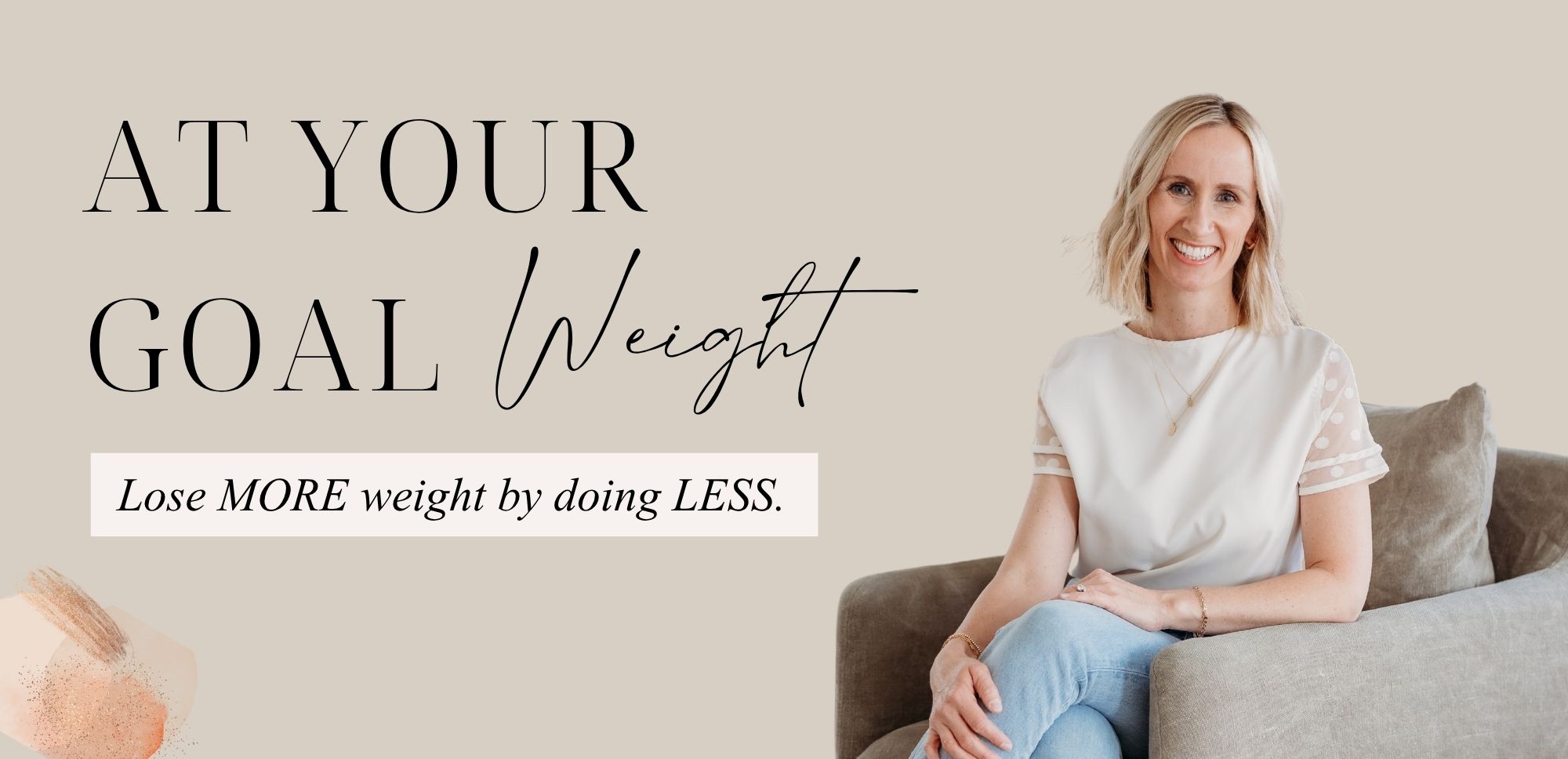
- Want to lose weight? Join my weight loss program here: At Your Goal Weight
- Come find me on Instagram so we can connect.
- Sign up for the Mom On Purpose Weekly Newsletter to get a tool, tip, or resource sent to your inbox every Thursday.
Full Episode Transcript:
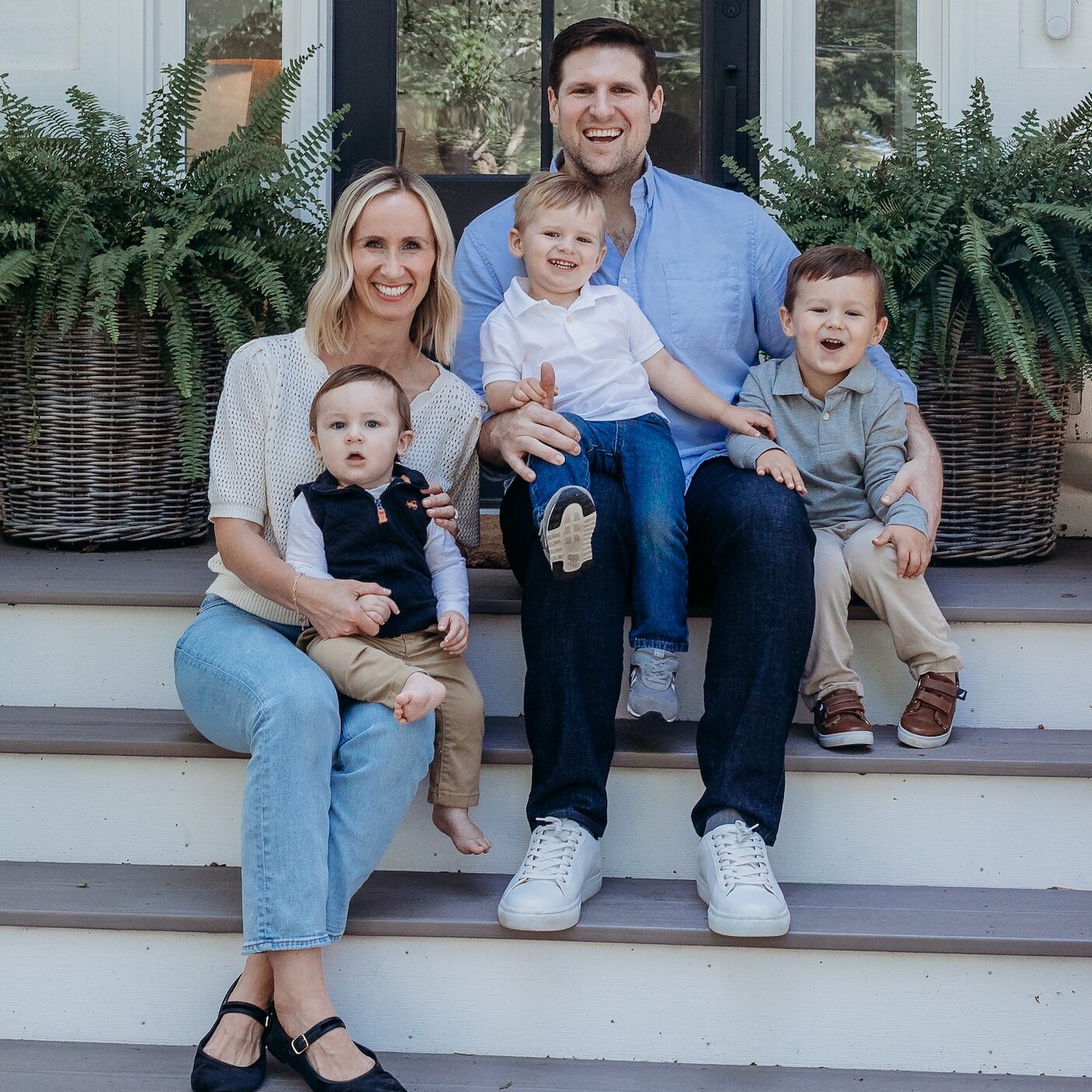
Welcome to Mom On Purpose, where it’s all about helping moms overcome challenges and live their best lives. My hope is by being here, you are more inspired to become the mom you are made to be. I’m Natalie, your host, a wife, boy mom, dog mama, Chicagoan, and former lawyer turned professionally certified coach. If you’re here to grow, I can help. Let’s go.
Hello, my beautiful friends. I am so happy to be here with you today. I have a brand new free weight loss training for you. You’ve got to get it. It’s over at momonpurpose.com/50down, 5-0-D-O-W-N. I’m sharing what I did to lose 50 pounds, what I didn’t do, why, my unique approach, and the biggest mistakes that I see millennial moms making with weight loss. I really think that if you are in a busy season of life and you want to lose weight, you’ve got to learn more about this and take this training.
Again, momonpurpose.com/50down. And just a reminder for those of you who are new here or maybe you haven’t been to the website in a while, over at momonpurpose.com is where I have all of the updated links to all of the offerings. And so primarily the two ways to work with me are At Your Goal Weight, which is my signature weight loss program. It’s an on-demand instant access weight loss course, or inside the Mom On Purpose Membership, which is all about decreasing stress, anxiety, overwhelm, the mental load. And that is more of an ongoing kind of mental and emotional gym where you’re getting weekly group coaching and listening to the replays. As one member recently told me, I just look forward to those replays because it keeps my brain sharp. And that’s really what I want to talk with you about today as well. I though it would be fun to talk about how I take care of my mental and emotional health.
I’ve got three young kids. I obviously was professionally trained in coaching tools, gosh, eight, nine years ago now. And my life has changed a lot since getting certified and since coaching other women and moms. So I want to talk with you about like my personal take on these tools and how they’re helping me and just how I think about mental and emotional health as a mom who is, you know, healthy and, and doing well and creating what I want in my life, but also still has challenges, still feels, stress, still, you know, gets into self-pity from time to time, still feels frustration. Like what’s that like? How do I take care of my mental and emotional health? And before I dive into that, I want to give the analogy of working on your physical health. So if you break a leg or receive a diagnosis, you’re going to go to your healthcare provider.
You’re going to maybe go to the hospital. You are going to seek out some sort of care to fix what is broken, okay? And then we’re going to get you back to baseline. Maybe you’re going to have surgery or get on medication or whatever it is to help you be free from that broken arm or disease or whatever it is. Be healed. Then from there, to take care of your physical health, you don’t go back to the maybe doctor who worked on your broken arm or whatever other type of professional that you saw for your physical health. To take care of your physical health once you’re at baseline, you might start working out, you might go to a gym, you might do workout classes, you might walk daily. I love the analogy between trying to fix something that is broken or not working versus working on yourself and your physical health, even though there’s nothing wrong.
Okay? I think that we do this really well in the physical space. And so I’m using this analogy, but I’m going to bring it back to the mental and emotional because I don’t think we’re there yet as much with the mental and emotional. So if you are healthy, you’re probably still taking care of your physical health in other ways. You’re working out or you’re walking or, you know, you’re stretching or you’re doing classes or you’re just chasing around your kids like I am. It’s not that you have to spend hours in the gym, but you are doing something to just move your body, take care of your health, even if it’s just walks. Like for me, it’s just walks and running around with my kids right now. That is very different than, you know, if I trip and fall after this podcast and break my leg, I’m going to go to the doctor and they’re going to fix my leg.
Whether that is wearing a brace, whether that is surgery, whatever it is, something’s not working, something’s broken. We’re going to fix it to get me back to baseline. And then from there, I still take care of my physical health, but it’s in a different way. Now, let’s apply that to mental and emotional health. I think we tend to think of mental health as this category of when something is wrong, we need to, you know, get on medication or do therapy. And I am pro whatever tools work. And so this isn’t against medication or therapy. Of course not. There’s a time and a place for it. Just like there’s a time and a place for going to the hospital and seeing a provider or physician or a practitioner to help you get your leg, you know, fixed, healed maybe you need surgery, maybe putting it in, back into place, whatever that is.
The same is true with your mental health. And I think we do a really good job of like that category, right? And so when we’re talking about mental health, typically there’s this like heaviness to it, like something is wrong or broken or there’s a diagnosis. And it’s not that there’s a problem with that. I just think it’s an incomplete model. So in the way that I was describing just a minute ago, your physical health and how when you are at baseline healthy, you don’t just ignore your physical health entirely. Even me, you know, I talk about how I don’t exercise. I still walk my dogs once or twice a day, of course, weather permitting. It’s Chicago, so not as much in the winter, but definitely if it’s weather permitting, I’m out there once or twice a day. And I’m chasing around little kids. And so I’m not sitting all day.
And I care about that. I’m not in a season of life where I’m going to be exercising and spending hours at the gym, but I do move my body. And when I think about the same kind of analogy for mental health, I don’t think enough of us, and I just want to be a voice for the case of optimizing your mental and emotional health when nothing is wrong. And so it’s not the heaviness of a diagnosis or a disease or something’s wrong. Just like it’s not the heaviness of, you know, being diagnosed with anxiety or depression or, you know, seeing a therapist or being on medication. Not that that all needs to be heavy. I’m not saying that at all. I’m definitely not saying there’s anything wrong with those things. I just want you to think about how with physical health, we’ve sort of normalized the category of something’s wrong.
I need support to get back to baseline and fix it. And then on the other hand, we have normalized, I’m going to take care of my physical health in this way, whether that’s through exercising, stretching, walks, working out. With mental and emotional health, I think we have the one category down of, diagnosing for mental illness and whether that includes any sort of like therapy or a psychiatrist or any other type of provider who can help you, as well as medication, if that’s something that is recommended for you. But then I think what we’re missing is the part where baseline, you are healthy, everything’s going well, and you still have a brain. You, just like you still have a body to take care of, you still have a brain to take care of. And that’s really where my coaching tools come in. I am advocating and just kind of want to be a voice for the later side of mental and emotional health.
It’s not like there’s a diagnosis or something’s terribly wrong or you need something to be fixed. Everything is baseline, okay, fine, good. However, you’re experiencing more stress, more anxiety, more overwhelm, more frustration, more disconnection in the ordinary things that you’re doing. It’s like you have what you set out to have, right? I always give the classic example of like a home, your job, or your kids, or your marriage, like whatever your version of this is what I wanted and now I have it, you have problems out of that desire and what you created. And so navigating those problems with a default brain that is wired to scan for negative, that is going to go into fix it mode, that struggles to sit down and rest and just enjoy what you have is solvable through brain management. And that is really what I want to talk with you about today because working on my mental and emotional health isn’t heavy.
It’s not something I do because, you know, I’m broken or damaged or something needs to be fixed. It’s not something that is a problem to be solved. Instead, it’s how I want to take care of myself. And for me, weekly group coaching, coaching in the Mom On Purpose Membership keeps my brain sharp. I think thought work is hands down the best way to kind of manage your primitive brain when it’s going into disconnection and resentment and frustration and tension, whether that’s through parenting or marriage or the mental load. I just don’t know another tool that gets to the root cause. For me, that’s what it’s all about because as I’ve already talked about, yes, you know, exercise as a release can be helpful to process emotion. Talking with your friends also can be helpful to process things and feel a sense of validation and connection.
Optimizing for routines, again, love a good routine, but you can do all of those things and more, right? You can practice meditation, you can sign up for Mahjong, you can do, you know, all of your self-care and you can still feel overwhelmed, stress, resentment, frustration, tension, any of kind of the typical emotions that you default to when it feels really challenging for you. For me, there’s also self-pity in there, like, “Poor me, why is this so hard? Why is this happening to me? Why do I have to do this?” Right? That have to language. So having tools that you can rely on to manage your brain that get at the root cause, I think there’s nothing better. And that is why I continue to do this work. That is why I continue to be a voice for this work. It is, things are going pretty, you know, well, and I’m feeling more of these emotions that I don’t want to be feeling. Or I am just struggling with this little part of motherhood, even if you wouldn’t necessarily articulate it in that way. A lot of my clients resonate with the overwhelm dialogue and language. It’s like, you wanted all of this, but it feels overwhelming. And how do you navigate that? And for me, it’s brain management first and foremost. Why? Because it’s so empowering. It’s what I have the most control over. So people often ask, like, “What is thought work? What is brain management?” Or they’ll say, “Well, like, I already learned, you know, thoughts, great feelings.” I’m like, “It’s not something you learn once.” It’s kind of like saying, “I already learned how to do a pushup.” It’s like, yes. And now you’re going to go to the gym and you’re going to do pushups just to take care of your arms and your body and your core forever, right?
It’s like there is no completion to moving your body as long as you have a body and are able. And I like to think of that in the same way for my mental and emotional health. It’s something I do to keep my brain sharp. I struggle sometimes to even put into words how much better my life is because of though work. It’s like in the subtle, nuanced ways that I experience so much more contentment. It would be so much easier for me to not do this work to, at the end of the day on default, fall into why is this so hard? Why don’t I have more help? I can’t believe my kids are fighting so much.
Shouldn’t they be out of this phase? They’re rude or disrespectful. And when is it going to get easier? And I’m worried about this kid for this reason and this other kid for the opposite reason and what’s that going to mean for their future? I mean, I really think I’m wired, a little bit more anxiously attached, I would say, for a variety of reasons. My past, my childhood, and also just my natural disposition. I mean, my kids have very, high functioning adult parents who have emotional maturity and I can even see that like two of them are a little bit more anxiously attached. And so I don’t think it’s all, you know, a product of the family you were raised in. Sometimes I think genetically we’re just wired a little bit more anxious from time to time. So for me, I run a little bit more anxious, type A, high strung, perfectionist, overachiever, fixer. And what does that mean? Like at the end of the day, on default, my mind would be racing about the next day and worrying about what’s upcoming. And that is with having, you know, like an amazing husband in home and, you know, being kind of financially well off.
Of course, it’s all relative, but like our needs are met. We are doing very well, I think. And even with all of that, my brain would go to the challenges, the mental load, the overwhelm, the worries. That is one that I don’t think I really appreciated as much before becoming a mom. And I work on my mental and emotional health for my sake because I don’t want to spend most of motherhood worrying. Like it is crazy how rampant this is. You might be someone who is like new to this work or you’re not really sure of like the impact of it. But worry is something that single-handedly I think you could do work on for a year and completely change the rest of your life. Like I am definitely someone who would default to worrying and it’s so natural for our brains to do that.
And yet the effect of that I think is kind of disastrous because it’s like a low grade worry that’s relentless. And the result of it is that days and weeks and months and years go by and the challenges and the flavor of that challenge, they change. So your worries change, but the constant is that your body repeatedly stays in the state of worry. Everything feels really important. It always seems justified to worry because typically it’s like with the relationships you care most about like your kids or your spouse. And it can feel really heavy. And again, it’s not a problem if it’s one time or one week or even one month. But, you know, like most of my clients, and definitely I can speak for myself without these tools, I would probably be in a constant state of low grade worry that would extend years because it’s so crazy, right?
Like our modern motherhood, the way that we’ve sort of defined being a good mom on default is all about our kids’ outcomes and if they’re feeling happy. And you have to do so much work to unwind that. And that, my friends, is work worth doing. And so if you don’t do that, and if I wouldn’t have done that, I definitely would be leaning heavily into worry. I’m thinking of an example right now. One of my kids really thrives socially and another one of them really thrives academically. And then in my opinion, the inverse also ends up being true where one of them struggles a little bit more socially and with friends. And the other one struggles a little bit more with school and academics and learning. And I know that I would be worrying constantly about each of them. And the, you know, they’re young. The flavor of the worry changes. So if they would have solved that or if they do solve that, then it’s going to be something else. And I saw this a lot as well with Jack getting his, you know, nut allergies. And I am able to stay out of worry. I still have to manage my mind around it because the circumstances change so much with kids. And so if it’s not this problem, it’s the next problem. If it’s not this little thing, it’s the next thing. And so that one, more than other topics, I do manage my mind around it more. But there is no substitute for thought work, for looking at the thought that is creating the worry. Because on default, we think, and I would have definitely thought that the worry is coming from my kids, that the worry is coming from their challenge, that my worry is coming from, you know, whatever they’re going through.
And it’s just not true. There is zero upside to worrying about your kids. And I truly, truly, truly believe that. That doesn’t mean I don’t want to help them. Of course I want to help them and support them and love them. But believing in them is something that I find to be so valuable and so important for their sake and for my sake. And I’m only able to get there in my mind by doing this work. Thought work, I also have the Connected Parenting Framework. And that keeps me in a state where I feel like I can be the leader. I can support them through any challenge that they’re having. Of course, we don’t want our kids to have challenges, but they do. And so what do we make of that? If we worry and if we’re only happy and content when everyone’s healthy and feeling good and happy themselves, then we set ourselves up for failure because guess what?
As part of childhood, as part of growing up, as just part of being a human being, we are going to experience challenges and so are our kids. Not only are we going to, but I believe we are supposed to. And so I’ve done so much thought work around that belief so that I’m not surprised. It still kind of comes up as a little bit of shock or surprise if one of my kids has a challenge that I didn’t foresee. But immediately I can do thought work around, “Oh, I was just wrong. I though they weren’t going to have this challenge, but now they are.” And I really think that without having though work in your ear, like week after week, it’s just going to be very, very hard. I don’t know how you would ever do this on your own because it, it’s like what they say in coaching is you can’t read the label from inside the bottle.
It’s just really hard to do. And so making sure that you have real coaching. I’m not talking about like motivation from a book because motivation or someone teaching you something, like even a podcast like this podcast or any other podcast, it can be helpful, right, to give you that little hit of motivation. But that’s very, very different than coaching. Teaching is very, very different than coaching. And for me, my mental and emotional health is so much better because I get coached, I listen to coaching, and I do personally coach all of you in the Mom On Purpose Membership, and it keeps my brain sharp. There’s a huge difference between coaching and teaching. When you’re listening to someone teach, right, like a good podcast or a good book, what you are experiencing is other people’s thoughts. So right now, I’m just sharing with you all of my thoughts.
Okay? Another podcast that you’re listening to, you’re listening to all of their thoughts. It doesn’t matter if, they’re an expert, they’re certified, they went to school for a bajillion years and whatever other expertise they have. It’s always someone’s thoughts because we don’t care about facts. It would be so boring if someone got on a podcast and read to you actual facts. Like I’ve never heard a podcast that is just all about facts. We want to hear opinions and stories. And of course that doesn’t mean that you shouldn’t have thoughts and opinions and stories. What I’m describing here though is something that I think we miss when we talk about mental and emotional health. Mental and emotional health to me is so important to take care of because of the way that the brain is wired. And when you’re listening to someone else’s thoughts, it’s helpful because it can offer you new thoughts, but what it doesn’t do is it doesn’t help you see what your thoughts are.
And all of us, including myself, I’m no exception to this even after doing this work for almost a decade, we all have thoughts, sentences in our head that we think are facts. And that is why we experience anxiety, frustration, overwhelm, disconnection. The negative emotions that we feel that make life like harder than it even needs to be, right? That added level of suffering happens because of the sentences in our head. And there’s no way to kind of get that from a motivational book or a podcast, right? It’s, it might give you a perspective shift, but I kind of compare it to like the difference between coaching versus like affirmation. It’s like not bad or wrong, like I’m all for a good affirmation. But it doesn’t take a look into what’s going on in your brain, in your specific situation. As long as I have a healthy human brain and body, and mentally able, I will be coaching and listening to coaching because of the positive impact it has had on my life.
If I wouldn’t have learned how to look at my thoughts, pay attention to my thoughts, just me, my personal default negative emotions are self-pity, poor me, and really just not even believing what is possible. And, you know, I got married and had three kids. I mean, heck, I met my husband, got married and had three kids within like a six year period, right? About that? So crazy. Like that’s fast. I 10X’d. And my family of origin set up was not designed for that. If I would have followed into the patterns that I was kind of raised in, I probably would have married an alcoholic. I probably would have continued to struggle in my relationships. I probably would still be an attorney is my guess, right? I was set up for that. We continue to do the things that we’re exposed to, and that means we continue to think in the ways that we are exposed to. So learning how to think and how to feel, I think are two of the most important skills that you can ever learn to take care of your mental and emotional health. They have been exponentially rewarding for me. I mean, my life is so much better. It’s, kind of like I’m creating what I want, but I have the capacity to have it. I don’t self-sabotage. So I created this marriage with Steve that is safe and healthy and he’s not a drinker and I’m not a drinker. And it is beautiful. Like I did that. That’s amazing. I did it because of these tools. Same thing with having my kids back to back to back. And I always wanted to be a mom and I’m so glad that I did that. And is it hard? Yeah. But I’m up for it. I continue to work on my skills of overwhelm, of stress, of anxiety, of letting go of those perfectionist thoughts and letting go of thinking my kids should be happy all of the time and letting go of tying my worth to their outcomes and letting them have challenges and reminding myself that I have no idea what their challenges are supposed to be and reminding myself that Steve and I are supposed to parent differently.
I mean, truly I could just riff endlessly at the way that thouht work and these tools have impacted my life. And it’s because I use them every day. I do, because I’m with myself and my brain every day. And I like to just chalk it up to having a crazy brain. And I think it adds lightness to it. I think we all do. And if we don’t take that opinion, then anytime you have a thought that you would be judging, let’s say, it can feel shameful. And the problem with that is then you hide. Shame hides. And so it’s like, oh no, we’re not going to look at that though. That thought’s a terrible though. I’m embarrassed to have that thought. What we want to do instead is, oh no, no, no. That’s just your brain being a crazy brain like all crazy brains. And let’s take a look at it and see what’s really going on for you.
No shame, no embarrassment, no judgment. This is just a brain doing what brains do. And then you can get some leverage over it. And so think about your mental and emotional health. And think about where you’re at with. Start with like your emotions, right? Take the last week, the last seven days. What would you say your top positive emotion was and your top negative emotion? Okay? Start there. And just kind of sit with that. It’s not because of your life. It’s not because of your job. It’s not because of your kids. It’s not because of your husband. It’s because of your mind. Not to blame you, of course not. This is where we go to, right? We like to bla- blame our spouses, our lives, our work, our kids. And then when we realize, oh my gosh, it’s my thoughts, then we want to blame ourselves. And so there’s this ping pong of blame. I’m not talking about that. I think that’s extraordinarily unhelpful. So what I like to go to is just remind myself, there’s no one to blame. There is no one to blame. By taking ownership of my top feelings, the positive and the negative in the last week, I can get leverage over them to create more of what I want. So if you’re kind of in a typical season of life, meaning there’s nothing out of the ordinary, you know, like I’m not talking about there was just some devastating news where it’s appropriate and you want to feel heartbreak. I’m talking about, okay, the last week has been kind of a typical week and your top positive emotion, maybe you don’t even know. Maybe you didn’t feel positive emotion that you can even remember. Maybe you notice a lot of stress and overwhelm.
Okay. Now what you can do is you can own that you’re feeling stress and overwhelm. And instead of kind of what we do on default, which is wanting our lives to change, wanting our work to change, wanting our kids to change, wanting our circumstances to change in order to feel better, which makes it so much harder for us to feel better because we can’t control them. And often we try to circumstance hop to change our feelings. It works sometimes, but only because you are changing your thoughts when you change your circumstances. And the problem with that is you will continue to circumstance hop anytime that something gets difficult or that you don’t like and you’re sort of always chasing this feeling versus, okay, let’s work on the skill of stress management, of overwhelmed management. There’s so much good work for you to do there so that you can have freedom from stress, freedom from overwhelm. And it all starts with being able to look at your thoughts, separate thoughts from facts, see the connection between what you’re thinking and how you’re feeling. And then it’s like the sky’s the limit because then you can create the thoughts and feelings that you want to create given the circumstances. You can think anything, my friend. Anything. Working on your thoughts, I think is the most underrated and for me has been the most beneficial tool and process and modality for my mental and emotional health. It makes my life so much better. So if you’re not doing it now, I highly encourage you to do it. You can join me inside the Mom On Purpose Membership. If not my program, definitely join another program. Make sure that you are in a program that I kind of think of it as like the mental and emotional gym where it’s something that you’re having in your brain that’s actually really excellent coaching week after week after week, just to keep your brain sharp.
And if you do want to join me, if you like this podcast, you’ll probably like the Membership over at momonpurpose.com/coaching. In any of these programs, I would just expect to at least join for a year for your sake. So really you can work on these thoughts and feelings and it takes some time. But a year’s going to pass by anyways. And so it’s like, do you want a year to go by and you are feeling the same feelings? Or do you want a year to go by and now you’re thinking and feeling in different ways and now you feel more empowered and you have less stress and anxiety and overwhelm. Everything, including your life and motherhood and your marriage feels a lot lighter. Like if that’s available to you, to me, it is worth 10 times the cost of my program. I can’t speak for any others, but it’s something that I think we just don’t talk about enough. And so I want to be the voice for working on your mental and emotional health when things are actually going well, just because that’s how you want to take care of your mental and emotional health. And it will make your life so much better in the very best way. I can’t speak more highly of it enough because of how it’s impacted my life. All right, my beautiful friends, that’s it for today. I will talk with you next week. Take care.
Enjoy the Show?
- Don’t miss an episode, follow the podcast on Apple Podcasts or Spotify.
- If you haven’t already, leave a review in Apple Podcasts.